
2026 Best Hammer Mill Crusher for Sale?

Time:2026-11-09 Author:Isabella
0%

In 2026, a “best” Hammer Mill Crusher is not simply the machine with the largest motor or lowest quoted price. The right choice depends on feed material, target particle size, moisture, throughput, and expected operating hours. A unit that handles dry grain may perform poorly with damp biomass or abrasive minerals. Details matter.

This guide explains how to compare hammer mill crushers for sale using practical, checkable criteria. It covers rotor speed, screen options, hammer wear, power demand, dust control, safety guards, maintenance access, and parts availability. Ask suppliers for capacity figures based on your material and screen size, not just broad catalog estimates. Request a test run or sample output when possible. Confirm what the quoted price includes, since the motor, controls, installation, and shipping can change the real cost. Verify specifications and service support directly with the manufacturer.

There is no universal winner. That is worth remembering. A smaller machine may suit steady, modest production, while a larger model may fit a high-volume operation—but only if the feed system and downstream equipment keep pace. Product listings can omit inconvenient limits, and estimates should be checked against actual material. Use the comparisons ahead to narrow your options, prepare questions for vendors, and select equipment that fits your process rather than a sales slogan.
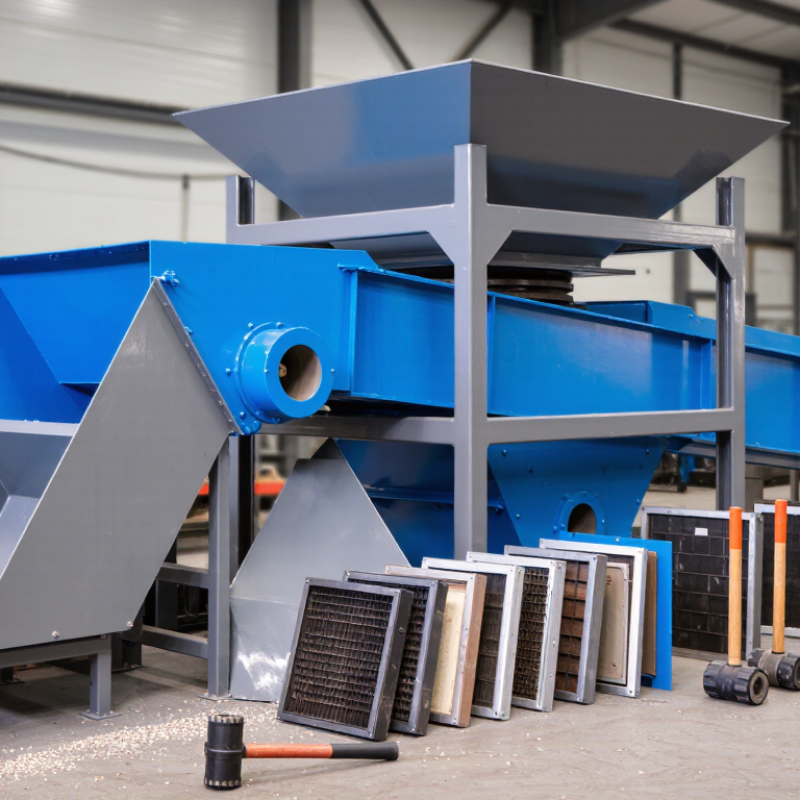
2026 Best Hammer Mill Crusher for Sale?

What a Hammer Mill Crusher Is and How It Works

A hammer mill crusher reduces material through repeated impact. Inside the housing, a motor spins a rotor fitted with swinging hammers. Feed drops into the grinding chamber, where the hammers strike it against breaker plates and other particles. Smaller fragments pass through a perforated screen; larger pieces stay inside for further impact. Simple in principle. Yet screen condition, rotor speed, feed moisture, and material hardness all affect the result.

Screen openings help determine final particle size, but they are not a precise guarantee. Amerah and colleagues’ 2007 review in World’s Poultry Science Journal discusses poultry-feed research using maize particles around 600–900 micrometres. That range shows why mill settings matter: finer grinding can suit some feed formulations, while coarser particles may be preferred in others. The review also emphasizes that particle size needs to be considered alongside bird age and diet composition. A sieve test can check the actual output. Do not rely on the screen label alone.

In practical use, listen for uneven rotor noise and check for heat, vibration, and worn hammers. A damp handful of grain may bridge at the inlet, while dry, brittle material can create more dust. The U.S. Occupational Safety and Health Administration identifies airborne grain dust as a workplace exposure concern, so extraction and housekeeping deserve attention. Not an afterthought. Before choosing a machine, compare the required throughput, target particle size, screen options, and maintenance access. I would still verify those figures with a material trial; catalog capacity can shift with feedstock and moisture.

2026 Best Hammer Mill Crusher for Sale? What a Hammer Mill Crusher Is and How It Works

A hammer mill uses rotating hammers to impact material against a screen. This chart shows calculated hammer-tip speed at different rotor speeds for an example 0.40 m rotor diameter. Values are derived using tip speed = π × rotor diameter × RPM ÷ 60; they are not performance specifications or a recommendation for a particular mill.

Main Types of Hammer Mill Crushers Available in 2026

2026 Best Hammer Mill Crusher for Sale?

Main Types of Hammer Mill Crushers Available in 2026

Hammer mills are commonly grouped by rotor layout and how ground material exits. Gravity-discharge models let material fall through the screen, making them practical for straightforward grain and feed applications. Pneumatic-discharge mills use airflow to carry particles away; they can suit finer grinding but add fan and dust-collection requirements. Full-circle screen designs provide more screening area around the rotor, which may support higher capacity with suitable material. Actual output still depends on moisture, screen openings, and feed consistency.

USDA’s November 2024 World Agricultural Supply and Demand Estimates projected U.S. corn production at 15.2 billion bushels for 2024/25. That scale illustrates why throughput and maintenance matter in grain processing, though the figure is not a hammer-mill sales measure. The U.S. EPA’s AP-42 grain-processing profile also identifies hammermills within grain-processing operations. For a purchase, compare rotor speed, screen access, bearing service, and measured capacity using your own material. A dry kernel and a damp one behave differently. Easy to overlook. Oversized screens may boost flow, yet leave a coarser product; finer screens can raise power demand and heat. No configuration wins every job. Test samples before choosing, and treat supplier capacity figures as estimates until verified under your operating conditions.

Key Specifications for Comparing Hammer Mill Crushers

2026 Best Hammer Mill Crusher for Sale?

Key Specifications for Comparing Hammer Mill Crushers

A hammer mill comparison starts with rotor diameter and working width, but those figures alone do not predict output. Rotor speed, hammer shape, and screen opening affect how consistently material breaks down. Numbers need context.

Ask sellers for rated capacity using your feed material and target particle size. Dry, brittle material may process faster than damp, stringy feed. If a quote lists tons per hour without test conditions, treat it as an estimate, not a promise.

Check the discharge. Screen perforations influence particle size, while larger openings may increase throughput and produce a coarser result. Match motor power to the feed rate, then check electrical requirements and energy use. Compare inlet size, too; frequent pre-cutting can erase an apparent capacity advantage. Ask about hammer and liner materials, replacement intervals, cleaning access, and vibration limits. These details can affect downtime as much as purchase price. Include dust collection and guarding in the installation plan. Wear rates still depend on material abrasiveness, operating habits, and hours run. A trial with representative feed may reveal more than a polished specification sheet.

How to Choose a Hammer Mill Crusher for Your Material

Choosing a hammer mill crusher starts with the material, not the advertised capacity. Check its moisture, hardness, abrasiveness, and fiber content. Wet feed may stick to screens, while abrasive feed can wear hammers and liners quickly. Start with a sample. Note its typical feed size and the particle size your process needs; a coarse output and a fine powder require different screen choices. If the material varies between batches, record those changes too. A single ideal sample may not represent daily production.

Compare screen options, rotor speed, and available motor power against your target output. Ask how capacity changes with your material and desired particle size; figures from a different feed can mislead. Request a trial using a representative sample, including its usual moisture level. Measure output, power use, and wear after the test. Small details matter. Check that the machine has suitable guarding, dust control, and accessible parts for routine inspection. I would not choose the largest model by capacity alone: it may use more energy than your process requires. That trade-off is easy to miss, and test results still need to be checked against real operating conditions.

What to Check Before Buying a Hammer Mill Crusher in 2026

Before buying a hammer mill crusher in 2026, match the machine to your actual feed material. Record its type, average size, moisture level, and expected daily volume. Ask for capacity figures based on similar material, not an ideal dry sample. A test run can reveal uneven output, excess fines, or frequent screen blockages. If possible, bring a representative sample. Moisture matters more than many buyers expect.

Check the rotor speed, hammer arrangement, screen sizes, and motor power together. These factors affect particle size, throughput, wear, and energy use. Ask how quickly operators can change screens and replace hammers. Look closely at access panels, fasteners, and lifting points. Small detail. Poor access can turn routine maintenance into a long, frustrating job. Request a parts list and realistic service intervals, then compare them with your operating schedule.

Inspect the machine’s guards, emergency stops, dust-control connections, and noise information before purchase. Confirm that the proposed installation suits your floor space, power supply, and material-handling setup. Ask what the quoted capacity assumes, including feed consistency and operating hours. A brochure rating is only a starting point; real output varies with material and settings. Cheaper equipment may still cost more if wear parts are difficult to source or downtime is frequent. That trade-off deserves a careful look.

2026 Best Hammer Mill Crusher for Sale? - What to Check Before Buying a Hammer Mill Crusher in 2026
Check Item What to Compare Why It Matters Buyer’s Verification
Feed material Material type, bulk density, hardness, abrasiveness, moisture, and maximum feed size Hammer mills are selected for a specific duty; different feed properties can change throughput, wear, and product size. Provide a representative sample and request a test using the intended feed conditions.
Required capacity Rated throughput in kg/h or metric tonnes/h, stated for the same material and screen opening A capacity figure without its test material and operating conditions is not a reliable basis for comparison. Ask for a documented test result and confirm whether the figure is continuous operating capacity or a short-run maximum.
Particle-size target Target particle-size distribution and available screen perforations or openings The screen helps control discharge size; a smaller opening can reduce throughput and increase recirculation or heat. Specify the required finished-product range and request a sieve-analysis result from a sample run.
Motor and power supply Motor rating, voltage, phase, frequency, starting method, and full-load current The installation must match the local electrical supply and handle the machine’s starting and operating loads. Have an electrician check the site supply, protection, cabling, and motor nameplate requirements before ordering.
Rotor and hammers Rotor design, hammer material, hammer quantity, wear-part access, and balancing procedure Wear and imbalance can affect maintenance frequency, vibration, and machine life. Request hammer and screen replacement instructions, expected wear-part options, and spare-part availability.
Feed and discharge system Feeder type, feed control, discharge arrangement, and compatibility with conveyors or collection equipment Uneven feeding or restricted discharge can reduce output and cause unstable operation. Confirm the complete process layout, material flow, and any required feeder, ducting, or dust-collection connections.
Dust and operator safety Guards, interlocks, emergency stop, dust containment, and suitability for the material being processed Moving parts require guarding, and airborne dust may require control measures; combustible dust needs a material-specific risk assessment. Review the safety documentation and applicable local regulations with a qualified safety professional.
Noise and vibration Measured sound level, foundation requirements, isolation mounts, and vibration limits Installation conditions can affect noise, vibration, and the need for workplace controls. Ask how measurements were taken and check the proposed foundation and site noise requirements.
Maintenance and service Inspection intervals, access points, lubrication needs, service support, and replacement-part lead times Maintenance access and parts availability affect downtime and operating cost. Obtain a maintenance schedule, recommended initial spares list, and written service-response details.
Total installed cost Equipment, freight, installation, electrical work, dust control, commissioning, and spare parts The purchase price alone may not include the equipment and site work needed for operation. Compare itemized quotations with the same scope, delivery terms, and commissioning requirements.
Warranty and documentation Warranty coverage, exclusions, operating manual, parts drawings, and compliance documents Clear documentation helps define responsibilities and supports safe operation and maintenance. Review the written terms, required operating conditions, and documents supplied before placing an order.

FAQS

How does a hammer mill crusher reduce material?

A motor spins a rotor with swinging hammers. They strike incoming material against breaker plates and other particles. Smaller pieces pass through a screen. Larger pieces stay for more impact. Simple, but not always predictable.

What determines the finished particle size?

Screen openings influence the result, but they do not guarantee an exact size. Rotor speed, material hardness, and moisture also matter. Check output with a sieve test.

Should I choose fine or coarse grinding?

It depends on the feed formulation and intended use. Some poultry-feed research discusses maize particles around 600–900 micrometres. Bird age and diet composition matter, too. One setting rarely fits every batch.

What should I check while the mill is running?

Listen for uneven rotor noise. Check for heat, vibration, and worn hammers. Damp grain may bridge at the inlet, while dry material can create more dust. Small details matter.

How can I compare machine capacity?

Ask for a capacity estimate using your material and target particle size. Dry, brittle feed may process faster than damp, stringy feed. Treat figures without test conditions as estimates, not promises.

Do larger screen openings increase output?

They may allow faster throughput, but the result can be coarser. Compare screen options with your required particle size. A screen label alone is not enough.

What maintenance and installation details should I ask about?

Check cleaning access, hammer and liner replacement, electrical needs, and vibration limits. Plan for guarding and dust collection. I may be overcautious, but access can affect downtime.

Is a specification sheet enough to choose a mill?

Not always. Test representative material when possible, and record moisture and output size. Catalog capacity can shift with feedstock. A trial may reveal more.

Conclusion

A Hammer Mill Crusher reduces material by using rapidly rotating hammers to strike it against a screen or other internal surfaces. The size and shape of the finished product depend on factors such as hammer design, rotor speed, screen openings, and how the material is fed. In 2026, available configurations may include different rotor layouts, feed arrangements, and screen systems, each suited to particular processing needs.

To compare options, consider capacity, motor power, inlet size, adjustment range, wear-part life, maintenance access, and compatibility with your material’s hardness, moisture, and desired output size. Before buying, confirm that the machine can handle your expected workload, inspect the construction and replacement-part requirements, and review installation, operating, and support needs. Matching the crusher to the material and production goals is more useful than choosing by price or headline capacity alone.

Isabella

Isabella

Isabella is a dedicated marketing professional with a sharp focus on driving brand growth and engagement through strategic content creation. With an extensive background in digital marketing, she combines her passion for storytelling with her keen understanding of industry trends to deliver......