
How to Choose a Refined Salt Machine in China?

Time:2026-11-24 Author:Charlotte
0%

Choosing a refined salt machine in China is not just a matter of comparing prices or production claims. The right equipment must match the salt’s starting condition, target purity, required output, and available plant space. A supplier should explain how washing, separation, drying, and screening fit together for your specific material. Ask for the expected capacity, finished moisture level, and particle-size range in writing. Details matter.

Look closely at the parts that face salt and brine. Corrosion-resistant materials, accessible inspection points, and clear cleaning procedures can affect equipment life and routine maintenance. Request process diagrams, component specifications, and references from facilities handling similar feedstock. If possible, arrange a factory visit or a live test using a representative sample. A polished showroom tells only part of the story.

Compare quotations by scope, not headline price. Check what is included: installation guidance, operator training, spare parts, commissioning support, and warranty terms. Confirm that the proposed layout suits your building, power supply, and water-treatment arrangements. No checklist catches everything. I would still ask the supplier to identify likely bottlenecks, even when the answer feels inconvenient. That answer can reveal practical experience. Choose a partner who explains trade-offs plainly and supports claims with records, not only promises. A dependable refined salt machine should fit the process you actually run, not an idealized production plan.
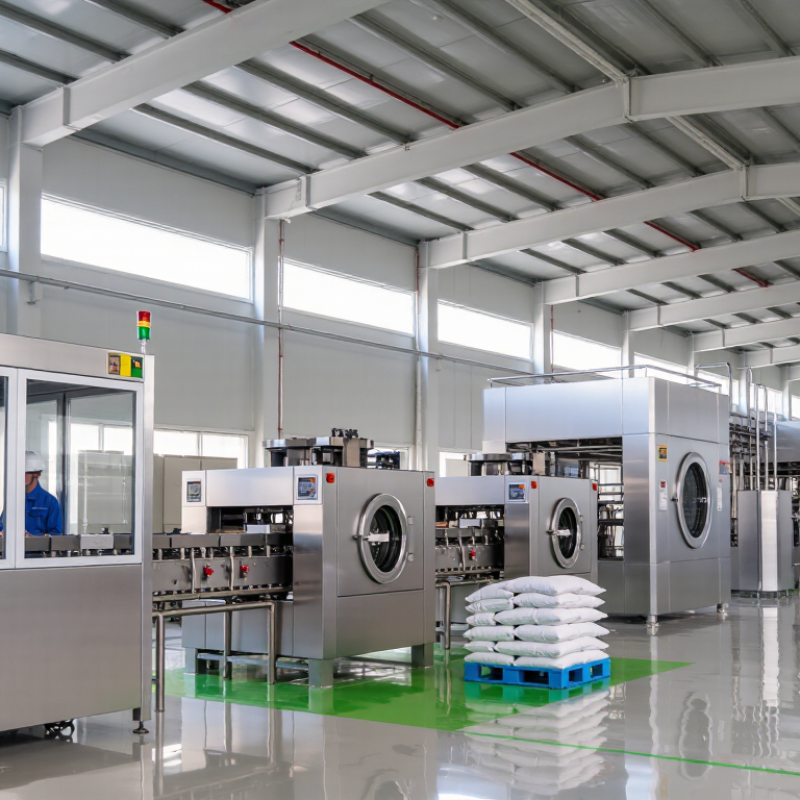
How to Choose a Refined Salt Machine in China?

Define the Salt Grade, Capacity, and Production Requirements

How to Choose a Refined Salt Machine in China?

Define the salt grade before discussing equipment. Food-grade and industrial salt can require different purity, moisture, and particle-size limits. Write down the target figures, then compare them with a laboratory report for your raw salt. Small details matter. A machine cannot reliably correct every variation in the feed material.

Capacity needs a realistic basis. Estimate finished salt per hour, working hours per shift, and expected peak demand. Include time for cleaning, routine maintenance, and product changeovers. A quoted capacity may assume steady feeding and ideal raw material. Measure the real demand. If the estimate is imperfect, say so and leave room to review it against actual production records.

Map the process you need: washing, drying, crushing, screening, or blending. Not every plant needs every step. Ask suppliers in China for process drawings, utility requirements, expected yield, and test results using material similar to yours. Check contact-surface materials and request relevant quality documentation for your intended application. Compare the full production line, not only the main machine. A fast unit can still create bottlenecks if its dryer or screen cannot keep pace. Record the assumptions behind each quotation; they are easy to overlook.

Compare Refined Salt Processing Machine Types

How to Choose a Refined Salt Machine in China?

Refined salt processing machines differ mainly in how they remove impurities and control moisture. A wet-processing line may combine washing, centrifugal separation, drying, and screening. It suits raw salt that needs thorough washing, but uses more water and requires careful wastewater handling. Check the washer’s throughput and the dryer’s heat control; uneven drying can leave damp clumps in the finished product. Small details matter.

A dry-processing line usually relies on crushing, screening, and air separation. It can use less water and may be practical when incoming salt is already relatively clean. However, it cannot correct every impurity problem. For either type, compare batch and continuous equipment against your expected daily output, not just the advertised capacity. Ask how operators clean product-contact surfaces and replace worn screens. Corrosion-resistant materials are important in salty, humid conditions.

Some plants add grading, optional fortification, or automated packing equipment. These modules can improve consistency, but they also add maintenance points. In China, request a process layout based on your raw salt’s moisture, particle size, and impurity levels. A neat diagram is not enough. I would also ask to see a sample run, then inspect the salt for dust, clumping, and particle uniformity. One practical detail is easy to overlook: local access to replacement parts can matter as much as the machine’s rated speed.

Evaluate Technical Specifications and Food-Grade Materials

How to Choose a Refined Salt Machine in China?
Evaluate Technical Specifications and Food-Grade Materials

When comparing refined salt machines in China, match rated capacity to your actual feed rate and target particle size. Ask for test results using salt similar to yours, not only a catalogue figure. Check how the machine handles moisture, dust, and changes in feed size. Small details matter. A screen that blocks during a humid shift can reduce output, even when the motor rating looks adequate.

Material claims need evidence. Request certificates for product-contact parts, and inspect welds, joints, and seals for crevices where salt can collect. Stainless steel grade alone is not a complete hygiene assessment; chloride-rich salt and wet cleaning can challenge surfaces. Ask about surface finish, cleaning access, and corrosion testing. A datasheet can look reassuring, perhaps too reassuring.

Use an authoritative benchmark when reviewing product quality. The Codex Alimentarius Commission’s Standard for Food Grade Salt, CXS 150-1985, sets a sodium chloride minimum of 97% on a dry basis, excluding additives. It also specifies maximum levels for contaminants, including 2 mg/kg for lead and 0.5 mg/kg for arsenic. These are product standards, not machine guarantees. Request trial-run samples and independent test results, then compare them with your incoming salt and required output. I would still treat a short factory demonstration cautiously; it may not reflect a full production shift.

Check Chinese Supplier Credentials and Compliance

When choosing a refined salt machine in China, check the supplier’s credentials against the equipment you will actually buy. The USGS Mineral Commodity Summaries 2024 estimated China’s salt production at 53 million metric tons in 2023. That scale makes supplier verification important; it does not prove that any individual factory meets your requirements.

Ask for a current ISO 9001 certificate, then verify its validity, issuing body, factory address, and scope. Request drawings, a bill of materials, and traceable inspection records for the machine offered. For product-contact parts, check material declarations and applicable test reports against the relevant GB 4806 standards. Confirm that certificates cover the actual stainless-steel grades and seals, not just a similar model. Paperwork can look convincing. Check the details.

A factory visit or live video audit can reveal what documents cannot: clean welds, guarded drives, clear wiring labels, and organized spare parts. Request a witnessed trial using your salt, then record throughput, moisture conditions, and product consistency. Ask for the test protocol and raw results. I would treat a smooth demonstration as a starting point, not proof; one trial may miss wear or seasonal variation. For exports, confirm destination-market requirements separately, since Chinese documentation alone may not establish compliance abroad.

Compare Installation, Operating, and Maintenance Costs

Choosing a refined salt machine in China means comparing lifecycle costs, not just the purchase quote. Request a written breakdown of freight, foundations, electrical upgrades, installation, commissioning, and operator training. Check whether the quoted capacity is measured in raw feed or finished salt; the difference affects cost per tonne. Ask for a site-specific energy estimate, not a generic brochure figure.

Operating costs deserve close attention.
The International Energy Agency’s 2011 report, Energy Efficiency Policy Opportunities for Electric Motor-Driven Systems, estimates that motor-driven systems use about 70% of industrial electricity. Compare each machine’s measured kWh per tonne, labor needs, water use, and expected product yield. Include routine parts such as screens, bearings, and seals in your maintenance estimate. One caveat: supplier estimates may not reflect your salt’s moisture or impurities. A tidy spreadsheet can still be wrong.

Tips: Build a five-year cost sheet using the same annual output for every quotation. Ask for service intervals, spare-part prices, and references from comparable installations. Check corrosion protection closely; salt dust can reach corners that look harmless.

FAQS

What should I define before choosing a refined salt machine?

Set your target salt grade, purity, moisture, and particle size. Compare these figures with a laboratory report on your raw salt. Small details matter.

How do I estimate the capacity I need?

Calculate finished salt per hour, shift hours, and peak demand. Include cleaning, maintenance, and product changeovers. My estimate may be imperfect, so review it against production records.

Should I choose wet or dry processing?

Wet processing can wash raw salt thoroughly, but it uses more water and needs wastewater handling. Dry processing uses less water, but cannot fix every impurity problem. Not always.

Which process steps might my plant need?

Map only the steps your raw salt requires, such as washing, drying, crushing, screening, or blending. Compare the complete line, since a slow dryer can bottleneck a fast machine.

What technical details should I check?

Match rated capacity to your real feed rate and target particle size. Ask for trials using similar salt. Check moisture handling, dust control, and screen performance during humid conditions.

How can I assess product-contact materials?

Request documentation for contact surfaces. Inspect welds, seals, and joints for places where salt can collect. Ask about cleaning access and corrosion testing. A datasheet alone may not tell the whole story.

What should I inspect in a sample run?

Look for dust, damp clumps, and uneven particle sizes. Request independent test results and compare them with your required output. A short demonstration may not reflect a full shift.

What practical details are easy to overlook?

Check utility needs, expected yield, and replacement-part availability. Ask for process drawings and record each quotation’s assumptions. Small details matter.

Conclusion

Choosing a refined salt machine in China begins with clearly defining the salt grade, target output, and production requirements. Consider the intended product quality, daily capacity, available space, and the level of automation needed. Then compare suitable processing machine types and assess whether each can support the required refining steps and fit smoothly into your production line.

Before making a decision, review technical specifications, including capacity, energy use, operating controls, and compatibility with food-grade materials. Check the supplier’s manufacturing experience, relevant credentials, quality procedures, and ability to provide clear documentation. Finally, compare the full cost of ownership—not only the purchase price, but also installation, training, routine maintenance, spare parts, and operating expenses. A careful evaluation of these factors can help you select a refined salt machine that meets your production goals and offers reliable long-term performance.

Charlotte

Charlotte

Charlotte is a seasoned marketing professional with a deep understanding of the company's portfolio and a passion for elevating its presence in the market. With a keen eye for detail and a commitment to excellence, she ensures that our professional blog is regularly updated with insightful articles......