
How to Choose a Water Washing Salt Machine?
Choosing a water-washing salt machine is not just a question of capacity. Salt type, incoming impurities, moisture, and the required product grade all affect performance. The U.S. Geological Survey’s Mineral Commodity Summaries 2024 estimated U.S. salt production at about 42 million tons in 2023. That figure shows the scale of the salt industry, but it does not tell buyers which washer suits their plant. The right choice starts with the feed.
Look closely at the process, not only the brochure. Ask for the machine’s capacity under conditions similar to yours, including salt particle size and impurity levels. Check water use, washing efficiency, corrosion-resistant materials, maintenance access, and the method for separating and drying the washed salt. A sample run can reveal what a specification sheet cannot: whether fine particles escape, whether the discharge stays consistent, and how often screens need cleaning. Small details matter.
Quality expert W. Edwards Deming’s reminder, “In God we trust; all others must bring data,” is useful here. It is not a salt-machine performance claim; it is a practical buying principle. Request test results and define how each figure was measured. Compare suppliers using the same feed and acceptance criteria. One uncomfortable point deserves attention: published capacity may not reflect your actual salt. Treat it as a starting estimate, not a promise. This guide explains how to assess a water-washing salt machine with measurable requirements, realistic operating conditions, and questions worth asking before purchase.
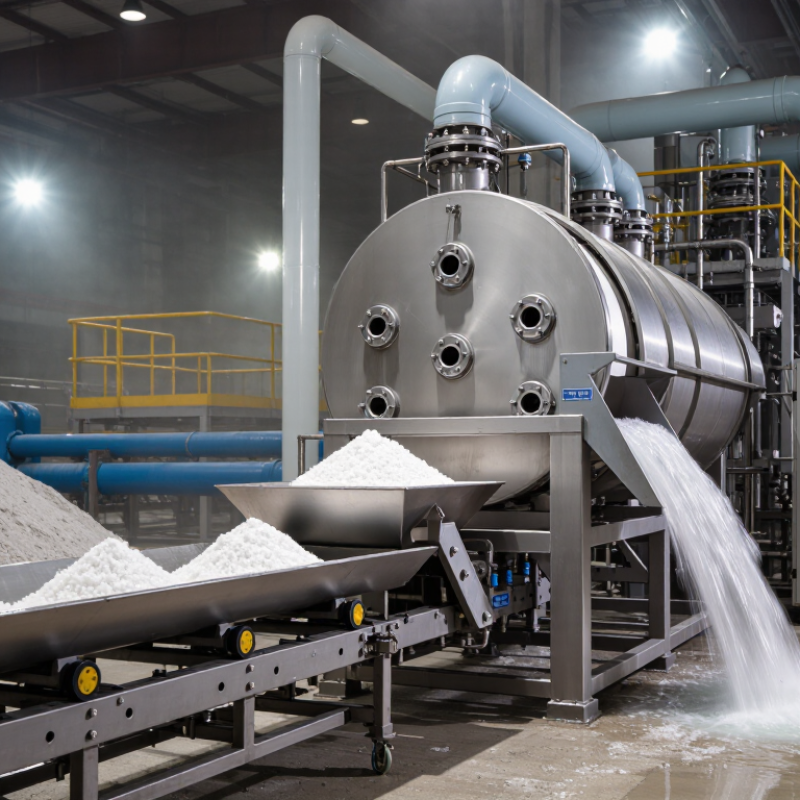
Understand How a Water Washing Salt Machine Works
A water washing salt machine cleans raw salt through controlled contact with water or concentrated brine. The feed enters a washing chamber, where paddles or rotating parts move the crystals. This gentle friction loosens clay, dust, and other surface impurities. The mixture then passes through screens or settling sections, allowing dirty liquid and fine particles to separate from larger salt crystals.
The liquid’s strength matters. Concentrated brine can reduce how much salt dissolves during washing, while fresh water may remove more soluble material and increase salt loss. After washing, the crystals are drained or spun in a dewatering unit. Some systems add a dryer to lower remaining moisture before storage or packing. The exact layout varies with the raw salt and the required product quality.
Small differences matter. A practical operator checks wash-water clarity, salt moisture, and the amount of fine material leaving the machine. If the feed changes, the water flow or washing time may need adjustment. Too little washing can leave visible dirt; too much can waste salt and energy. The process is not perfectly uniform, especially when crystal sizes vary, so regular sampling helps reveal what the machine is actually producing.
| Equipment type | How it works | Typical role | Suitable conditions | What to check before choosing |
|---|---|---|---|---|
| Screw washer | A rotating screw moves salt through a trough while wash liquid contacts the crystals. The screw provides conveying and mixing; the liquid carries away loosened surface impurities. | Continuous washing and conveying of granular salt, often as one stage in a larger washing line. | Suitable when a continuous process is needed and the feed is reasonably consistent in size and flow. | Check required throughput, residence time, crystal breakage, wear-resistant materials, drainage, and whether the wash liquid can be recirculated. |
| Agitated washing tank | Salt is mixed with wash liquid in a tank. Agitation brings liquid into contact with the crystals; the slurry is then discharged for solid–liquid separation. | Batch or continuous contact washing, including processes that need adjustable mixing or wash time. | Useful where feed quality varies or operators need to adjust the washing conditions between batches. | Review tank working volume, agitator design, batch time, discharge method, and the downstream equipment needed to separate the washed salt. |
| Spray washer | Nozzles spray wash liquid over salt as it moves on a screen, belt, or similar conveyor. The screen allows liquid and fine contaminants to drain away. | Surface rinsing and removal of loosely attached fines or soluble residues. | Best considered when contamination is mainly on the crystal surface and the feed can be spread in a relatively even layer. | Check spray coverage, nozzle clogging risk, screen opening size, drainage capacity, and wash-liquid consumption. |
| Hydrocyclone (where applicable) | A slurry enters tangentially and spins inside the cyclone. Centrifugal forces help separate particles according to their settling behavior, with different fractions leaving through separate outlets. | Classification or removal of selected suspended solids as part of a slurry-handling circuit; it is not a universal replacement for direct salt washing. | Consider only when feed tests show that the target particles can be separated under the actual slurry conditions. | Confirm particle-size distribution, slurry concentration, pressure requirements, cut size, and separation results through testing. |
| Centrifuge (dewatering stage) | Rotation creates centrifugal force that separates liquid from solid salt. A centrifuge generally removes liquid after washing rather than performing the main washing step. | Reduces retained liquid in washed salt before further handling or drying. | Appropriate when the process produces a wet salt slurry or washed crystals that need mechanical dewatering. | Check salt crystal size and fragility, required final moisture, solids feed rate, corrosion resistance, and wash-liquid recovery options. |
Selection note: Salt is soluble in water, so wash-liquid concentration and contact time affect product loss. Saturated or near-saturated brine is often considered when the goal is to remove insoluble impurities while limiting salt dissolution. The appropriate liquid, equipment capacity, and process sequence depend on feed composition, crystal size, product requirements, and water-recovery arrangements; confirm these with representative feed testing.
FAQS
Paddles or rotating parts move salt crystals through water or concentrated brine. Gentle friction loosens clay, dust, and surface impurities.
Concentrated brine can reduce salt loss during washing. Fresh water may remove more soluble material, but some salt can dissolve. Not always ideal.
Screens or settling sections let dirty liquid and fine particles separate from larger crystals. The layout depends on the raw salt.
The crystals are drained or spun in a dewatering unit. Some systems use a dryer to reduce moisture before storage or packing.
Check wash-water clarity, salt moisture, and fines leaving the machine. If the feed changes, adjust water flow or washing time.
Too little washing may leave visible dirt. Too much can waste salt and energy. Sampling helps reveal uneven results.
Check wetted parts, welds, seals, fasteners, and drain points for brine exposure. Polished surfaces help cleaning, but trapped brine in crevices remains a concern.
Check guarded moving parts, overload protection, a clear stop button, and lockout points. Access doors should stop hazardous motion, and restart should require deliberate action. A checklist may miss glare or awkward reach. Worth checking.
Conclusion
Choosing a water-washing salt machine starts with understanding how it removes impurities through washing, separation, and dewatering. Consider the type of salt you process and the required output capacity, since these factors determine the machine’s size and configuration. Check that the washing system suits your process and that the conveyors can move material steadily without interrupting production. Effective dewatering is also important for achieving the desired moisture level.
Compare construction materials, controls, and safety features to ensure the equipment is durable and straightforward to operate. Before purchasing, assess installation space, utility connections, and access for routine maintenance. Finally, compare expected operating costs, including water and energy use, replacement parts, and servicing. Evaluating these requirements together can help you select a machine that fits your production needs and supports reliable, efficient operation.
