
China Top 10 Salt Processing Production Line Manufacturers

Time:2026-10-20 Author:Amelia
0%

China’s salt industry is moving toward cleaner, faster, and more traceable production. A modern Salt Processing Production Line may include washing, crushing, centrifuging, drying, screening, iodization, and automatic packing. Each stage affects purity, moisture, energy use, and final consistency.

Production-quality expert W. Edwards Deming said, “Quality comes not from inspection, but from the improvement of the production process.” This principle remains highly relevant to salt manufacturers. Strong Chinese suppliers do not simply install attractive equipment. They study raw salt conditions, local water quality, factory layout, labor skills, and packaging requirements. Practical details matter. A poorly designed conveyor can collect moisture. An undersized dryer can create unstable output. Weak dust control can reduce workplace comfort and product hygiene.

This article reviews China’s top ten Salt Processing Production Line manufacturers through several practical indicators. These include engineering experience, equipment integration, automation, food-grade design, energy efficiency, commissioning support, spare-parts availability, and after-sales service. Project adaptability also matters, because a coastal refining plant faces different conditions from an inland rock-salt facility.

No ranking is perfect. Public company information can be incomplete, and quoted capacity may not match daily production. Some suppliers show impressive machinery but provide limited operating evidence. That deserves careful reflection. Buyers should request factory references, process drawings, test reports, and a detailed service agreement before making a decision. The strongest manufacturer is not always the largest. It is often the one that understands the salt, the site, and the operator’s real working conditions.
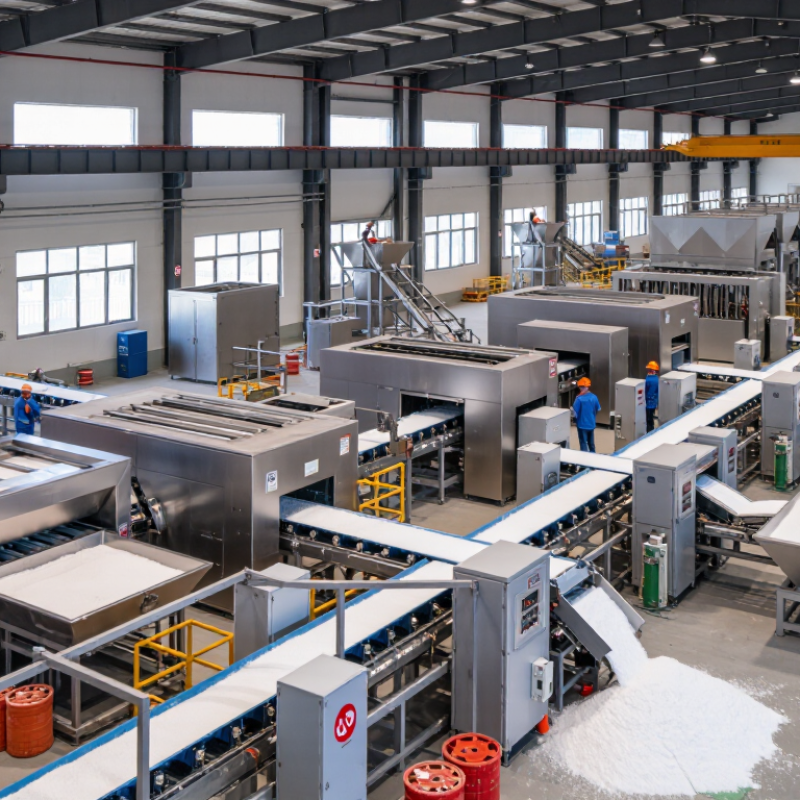
China Top 10 Salt Processing Production Line Manufacturers

Salt Processing Production Lines: Definition and Core Functions

Salt processing production lines are integrated systems that convert raw salt into clean, uniform, and market-ready products. A typical line may include washing, crushing, screening, drying, iodization, and packing equipment. Each stage controls a specific quality factor. Washing removes clay and insoluble particles. Screening creates consistent crystal sizes. Drying reduces moisture and improves storage stability.

The core function is controlled transformation. Operators adjust water flow, temperature, conveyor speed, and screening settings according to the raw material. Reliable lines also use dust collection, metal detection, and moisture monitoring. These features support safer production and more predictable output. In practical installations, maintenance access matters as much as machine capacity. A fast line can still underperform when cleaning is difficult. No system is perfect.

Tips: Test the raw salt before selecting equipment. Check moisture, impurities, crystal size, and daily capacity. Leave space around key machines for inspection and repairs. Record operating data during trial production. Small changes in drying temperature may affect texture, energy use, and final packing performance. Iodization settings should follow applicable technical standards and local requirements. Human judgment remains important, even with automated controls.

Key Stages in Industrial Salt Processing

Industrial salt processing begins with raw salt inspection, not the evaporator. Operators check moisture, insoluble matter, particle size, and contamination before feeding the line. The U.S. Geological Survey’s Mineral Commodity Summaries 2024 estimated global salt production at about 270 million metric tons in 2023. That scale makes stable raw-material control essential. Small impurities can later damage screens, pumps, and heat-transfer surfaces.

Washing removes clay and surface impurities, while crushing creates a more consistent feed. Brine purification then uses clarification, filtration, and chemical treatment to reduce calcium and magnesium. The purified brine enters evaporation and crystallization, often through multiple-effect equipment. Heat recovery can reduce steam demand, although actual savings depend on feed concentration and equipment condition. The International Energy Agency identifies industrial heat efficiency as a major energy-management opportunity, but salt plants still need site-specific measurements. Generic promises are not enough.

Centrifuges separate crystals from mother liquor. Dryers lower residual moisture, and screening produces uniform grades for industrial or food applications. Iodized products require controlled dosing and sampling; WHO guidance treats iodization quality as a public-health concern. Packaging follows only after laboratory verification. Traceability matters.

No line is perfect. Operators may overlook corrosion under insulation or gradual filter fouling. Those details can reduce yield quietly. A reliable production line therefore needs calibrated sensors, documented cleaning intervals, and independent quality checks, not only impressive capacity figures.

Criteria for Ranking China’s Top Manufacturers

China’s top 10 salt processing production line manufacturers should be ranked by evidence, not advertising claims. Real engineering experience matters. Review completed projects, operating years, and salt types handled. A reliable manufacturer should explain washing, crushing, drying, screening, and packing stages clearly. Factory visits and customer references can reveal details that brochures often omit.

Technical capability deserves strong weight. Check food-contact materials, corrosion resistance, dust control, automation, and energy consumption.

Ask for production capacity under similar raw salt conditions. A line producing 10 tons per hour on paper may perform differently with wet or impure salt. Quality documentation, testing records, installation support, training, and spare-parts availability also affect the ranking. Transparent quotations are essential. The cheapest offer is rarely the safest choice.

Tips: Request a process diagram, equipment list, utility requirements, and acceptance-test plan. Compare actual output, moisture levels, salt purity, labor needs, and maintenance intervals. Examine whether engineers respond with measurements or vague promises. No ranking is perfect. Some suppliers may have excellent technology but limited overseas support. Others may provide strong service yet lack experience with complex refining projects. A fair evaluation should update scores after factory inspections, pilot tests, and verified customer feedback. This approach makes the list more practical, although personal judgment still influences the final result.

China’s Top 10 Salt Processing Production Line Manufacturers

China’s Top 10 Salt Processing Production Line Manufacturers should be assessed through measurable engineering performance, not promotional rankings.

The U.S. Geological Survey reported global salt production at approximately 270 million metric tons in 2023. China contributed nearly 62 million tons, creating strong demand for reliable washing, crushing, drying, screening, and packaging systems.

A qualified manufacturer should show complete process data. Look for evaporation rates, steam consumption, product purity, dust control, and equipment uptime. In practical factory audits, stainless-steel contact surfaces, enclosed conveyors, and automatic moisture control reveal more than polished brochures.

The United Nations Industrial Development Organization links efficient industrial systems with lower energy use and better process monitoring. That matters because thermal drying can become the largest operating cost.

The strongest Chinese suppliers usually provide layout design, commissioning, operator training, and replacement parts. They should also document testing under the customer’s raw-salt conditions.

A line handling wet sea salt may perform poorly with mined salt. This detail is often overlooked.

Still, “top 10” is not an official technical category. Rankings can change with capacity, export experience, automation depth, and after-sales response.

Buyers should request recent production records and inspect a running installation. A few suppliers may publish impressive output figures, yet omit energy consumption.

That omission deserves careful questioning.

How to Select a Suitable Chinese Salt Line Manufacturer

China Top 10 Salt Processing Production Line Manufacturers

Selecting a suitable Chinese salt line manufacturer requires more than comparing prices. The USGS Mineral Commodity Summaries 2024 reported global salt production at about 270 million metric tons in 2023. China remained one of the largest producers. This scale creates many equipment choices, but quality still varies.

Start with your raw salt analysis, target capacity, moisture level, and final grain size. A reliable manufacturer should provide a process flow, energy estimate, material specifications, and factory references. Ask for test production using your own salt. This can reveal blockages, uneven drying, or unexpected dust.

Request records for evaporators, centrifuges, dryers, iodization systems, and packing machines. The International Energy Agency reports that industrial efficiency depends heavily on process integration, not one machine alone. Therefore, examine heat recovery and automation carefully. Cheap equipment may create higher maintenance costs.

Tips:

Check stainless-steel grades and welding quality. Confirm spare-parts availability for at least two years. Review acceptance standards before signing. Ask for operator training and remote support. Visit an operating plant if possible. Do not trust polished videos alone.

The manufacturer should also explain wastewater handling, noise control, and workplace safety. ISO 9001 certification can support process consistency, but it does not guarantee excellent equipment. That distinction matters.

I would compare three technical proposals using the same checklist, rather than selecting the lowest quotation. A weakness in this method remains: factory data may look better than daily performance. Independent inspection is worth the extra cost.

FAQS

What does a salt processing production line do?

It converts raw salt into cleaner, more uniform, market-ready products. Washing removes clay. Screening controls crystal size. Drying lowers moisture.

Which machines may a salt processing line include?

Common equipment includes washers, crushers, screens, dryers, iodization units, conveyors, and packing machines. Dust collectors and metal detectors may improve process control.

What should be tested before choosing equipment?

Test moisture, impurities, crystal size, and daily raw-salt volume. Wet salt may need stronger drying. Impure salt can cause blockages.

How should manufacturers be compared?

Compare completed projects, similar salt types, actual output, energy use, and maintenance records. Do not rely on polished videos alone. They can hide ordinary weaknesses.

Why is trial production important?

Testing your own salt can reveal uneven drying, dust problems, or conveyor blockages. Small details matter.

What technical documents should a manufacturer provide?

Request a process diagram, equipment list, utility requirements, material specifications, and acceptance-test plan. Clear measurements are more useful than broad promises.

How can maintenance affect production performance?

Good access allows workers to inspect, clean, and repair machines quickly. A fast line may still underperform when maintenance areas are cramped.

What safety and quality features deserve attention?

Check food-contact materials, corrosion resistance, dust control, moisture monitoring, and metal detection. Also review wastewater handling, noise control, and workplace safety.

Does certification guarantee excellent equipment?

No. Certification may support consistent processes, but it cannot prove strong daily performance. Independent inspection remains valuable.

How should the final supplier decision be reviewed?

Compare three proposals using identical criteria. Visit an operating plant when possible. Review customer feedback, spare parts, training, and remote support. My judgment may still be imperfect.

Conclusion

This article presents a practical overview of the Salt Processing Production Line, explaining its definition, core functions, and role in transforming raw salt into refined, graded, and packaged products. It outlines the main industrial stages, including raw material handling, crushing, screening, washing, purification, drying, crystallization, storage, and packaging. Each stage is considered in terms of process efficiency, product quality, automation, energy use, and operational safety.

The article also introduces a structured approach to evaluating China’s top salt processing equipment manufacturers without focusing on individual brands. Key criteria include engineering experience, production capacity, equipment reliability, customization options, quality control, after-sales service, technical support, delivery capability, and overall project value. Finally, it offers practical guidance for selecting a suitable Chinese supplier by comparing technical requirements, production targets, investment budgets, factory conditions, compliance documentation, and long-term maintenance needs. This summary helps readers understand how to plan and assess a complete salt processing project with greater confidence.

Amelia

Amelia

Amelia is a seasoned marketing professional with a wealth of expertise in our company’s core offerings. With an unwavering passion for driving growth and innovation, she plays a pivotal role in shaping our marketing strategies and enhancing brand visibility. A key aspect of her responsibilities......