
Salt washing sits at the meeting point of mineral processing, food quality, and plant economics. The U.S. Geological Survey’s Mineral Commodity Summaries 2024 estimated global salt production at about 270 million metric tons in 2023. That scale helps explain why buyers compare equipment suppliers across regions. But tonnage alone says little about a machine’s washing performance, water use, or maintenance needs.
Salt historian Mark Kurlansky wrote, “Salt is the only rock we eat.” His observation is not an engineering specification. Still, it highlights why buyers must examine product cleanliness alongside throughput. A washing line should be assessed against the salt’s source, particle size, target purity, and downstream use. Ask for operating data from comparable installations, not just a polished brochure. Small details matter. Spray coverage, corrosion-resistant materials, and access for cleaning can shape daily performance.
This guide to the Top 10 Salt Washing Machine Manufacturers for Global Buyers will help readers compare suppliers using practical criteria. It considers process fit, customization, technical support, spare-parts access, and documented project experience. No ranking can replace a site-specific evaluation. Even a well-designed line may underperform if its feed characteristics or water conditions differ from the supplier’s assumptions. The comparison is a starting point, not a purchase decision. Buyers should verify claims directly and request references where possible.
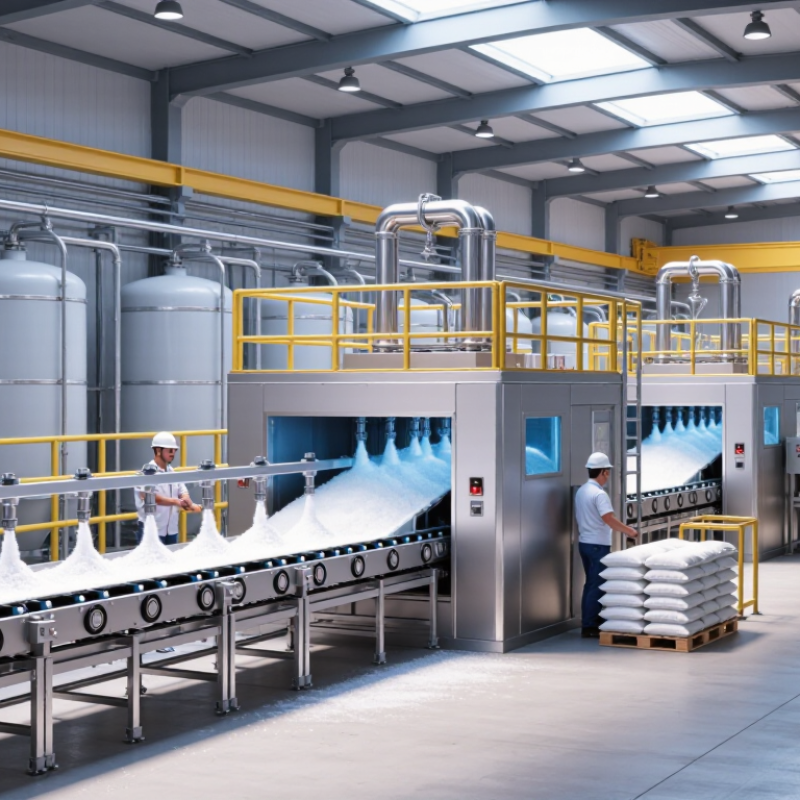
A salt washing machine removes clay, fine sediments, and other insoluble impurities from crude salt. It is often part of a processing line, not a single standalone unit. The USGS Mineral Commodity Summaries 2024 estimated global salt production at about 270 million metric tons in 2023. That figure shows the scale of salt production, but it does not measure washing-machine performance.
In a typical line, screens remove oversized debris before salt enters a wash tank. Agitation loosens dirt, while saturated brine helps limit salt dissolving into the wash water. A screen or centrifuge then separates the crystals from the brine. Drying and grading may follow. Details vary with salt size, impurity levels, and the intended use. Small changes matter. In practice, washing results can be uneven, especially when feed quality changes. Operators should check product samples, water balance, and salt loss during trials.
Tips: Ask suppliers for test results using your own salt sample. Check wash-water reuse, throughput, and moisture after drying. Clean equipment regularly; buildup can affect separation.
Choosing a salt washing machine manufacturer starts with the salt itself. Ask whether the equipment suits your feed size, moisture level, and target cleanliness. A dry crystal feed behaves differently from damp, impurity-heavy salt. Request a trial using a representative sample, then check the washed product for visible residue, moisture, and crystal breakage. Record the test conditions. Without them, performance claims are hard to compare.
Details matter. Salt and brine can corrode poorly selected components, so ask for specifications covering wetted parts, seals, fasteners, and protective coatings. A polished exterior tells little. Review equipment drawings and the proposed materials list. Also check rated capacity against your actual operating hours, not just a headline figure. A machine that meets a peak-rate target may still struggle with uneven feed.
Look for evidence of repeatable testing, clear acceptance criteria, and installations handling similar salt. Ask how the system manages rinse water, screens, and routine cleaning. Confirm spare-part availability, response times, and who supports commissioning. Even a successful factory trial has limits; site water quality and operator habits can change results. That uncertainty deserves discussion, not a footnote. A detailed quotation should identify exclusions, utility needs, and maintenance intervals before you compare suppliers.
Suggested buyer evaluation weights totaling 100 points. These are a customizable scoring framework, not measured ratings of specific manufacturers.
Prioritize washing performance, production capacity, and corrosion resistance, then adjust the weights to match your process requirements. Verify claims using technical specifications, test results, certifications, and service terms.
Salt washing machine manufacturers differ in the problems they are equipped to solve. These ten profiles describe useful supplier types, not named companies. A coastal-process specialist may understand corrosion from salty air and wet floors. Ask about stainless steel grades, weld finish, and protective coatings. Details matter. A compact-equipment maker may suit small plants with limited floor space. Check whether its feed hopper and discharge height match your layout. A high-capacity builder may offer continuous washing lines, but throughput figures need real operating conditions.
A customized-system supplier may adapt spray bars, conveyors, and rinse stages to a particular salt size. Request a process diagram. A control-focused manufacturer may provide clear alarms and adjustable wash cycles. Operators still need practical training. A hygienic-design specialist may reduce product traps around joints and guards. Inspect these areas in person or through detailed photographs. A water-management supplier may add filtration or recirculation, though salt loading can affect performance. Ask for test data.
A regional fabricator may offer faster service and easier access to replacement parts. A turnkey integrator may coordinate washing, dewatering, and conveying equipment. Confirm who handles commissioning. A technically experienced exporter may support installation remotely, but time zones can slow troubleshooting. None of these profiles guarantees quality. Compare material certificates, acceptance tests, spare-part lists, and references from similar salt-processing operations before choosing.
Buyer’s guide: The entries below are generic capability profiles, not named companies or a verified ranking. Equipment configuration and performance depend on salt type, feed condition, product specification, and process design. Confirm all claims with the supplier using a process-flow diagram, test data, and references.
| Profile | Typical Equipment Focus | Best-Fit Feed or Project | Relevant Capabilities | Key Buyer Checks | Typical Project Consideration |
|---|---|---|---|---|---|
| 1. Sea-Salt Washing Line Specialist | Screening, washing, brine separation, dewatering, and optional drying | Solar or mechanically harvested sea salt with variable moisture and insoluble matter | Process design that accounts for feed variability and salt dissolution during washing | Ask for feed and product analyses, salt-yield data, and the basis used for water consumption estimates | Seasonal feed variation can affect washing conditions and finished-product consistency |
| 2. Rock-Salt Processing Line Specialist | Crushing, screening, washing or scrubbing, and dewatering | Mined rock salt containing clay, stone, or other insoluble material | Integration of size reduction and cleaning steps before final grading | Verify the allowable feed-size range, wear-part materials, and how oversize or hard contaminants are handled | Crusher and screen selection should match the mine’s feed characteristics and target product sizes |
| 3. Screw-Washer Equipment Builder | Inclined or horizontal screw washing and conveying equipment | Projects needing a combined washing and material-transfer step | Compact equipment layout and continuous handling of granular material | Check screw dimensions, residence-time assumptions, water flow, and access for cleaning and maintenance | Performance depends on particle size, feed loading, and the degree of washing required |
| 4. Rotary-Drum Washer Builder | Rotating drum washing and screening arrangements | Coarse or mixed-size salt feeds where tumbling and rinsing are suitable | Continuous processing with a drum configuration designed around feed size and throughput | Confirm drum capacity, screen opening sizes, drive design, and provisions for managing wash water | Drum speed and residence time should be validated against the actual salt feed, not just a nominal capacity |
| 5. Attrition-Scrubbing System Integrator | Mechanical scrubbing followed by classification and dewatering | Salt carrying adherent clay or surface contamination that requires intensive cleaning | Process arrangements for separating released fines from cleaned salt | Request test results showing product cleanliness, fines generation, and salt loss under representative conditions | More intensive scrubbing can increase fines and dissolved-salt losses if the process is not properly controlled |
| 6. Hydrocyclone and Classification Specialist | Hydrocyclones, pumps, sumps, and associated screening or dewatering equipment | Wet circuits requiring separation of fine suspended solids from brine or salt slurry | Hydraulic classification as part of a broader washing and solids-recovery circuit | Check design feed concentration, pressure range, cyclone materials, and the proposed method for recovering salt solids | A hydrocyclone is a separation component, not a complete salt-washing line by itself |
| 7. Centrifugal-Dewatering Equipment Builder | Centrifuges or related mechanical dewatering equipment | Washed salt requiring reduction of retained liquid before storage or drying | Integration of solids discharge, liquid collection, and downstream handling | Confirm feed properties, expected cake moisture, materials compatibility, and cleaning requirements | Final moisture depends on feed conditions and machine design; it should be established through testing |
| 8. Belt-Filter and Filtration-Line Integrator | Vacuum belt filtration or other continuous filtration arrangements | Projects needing continuous separation of salt solids from process liquid | Filtration, cake washing where appropriate, and filtrate collection in a continuous layout | Request filtration-area calculations, cloth-selection details, wash-water balance, and solids-recovery data | Filter performance is strongly influenced by particle-size distribution and slurry characteristics |
| 9. Hygienic Salt-Processing Line Builder | Washing, dewatering, conveying, and optional drying equipment for food-related projects | Food-grade salt projects with documented product-contact and cleaning requirements | Equipment design and documentation tailored to the buyer’s hygiene specification | Review product-contact materials, surface finish, cleanability, certificates, and applicable local requirements | Food-grade suitability must be assessed for the complete line and site practices, not inferred from one machine |
| 10. Turnkey Salt-Plant Engineering Integrator | Coordinated washing, classification, dewatering, drying, conveying, and controls | Greenfield plants or upgrades requiring several process stages and interfaces | Process-flow design, equipment coordination, utilities planning, and commissioning support | Clarify battery limits, guaranteed test conditions, utility loads, spare parts, training, and acceptance criteria | Compare proposals on the same feed basis, product specification, operating hours, and scope of supply |
Salt-washing machine manufacturers differ most in process control, usable throughput, and support beyond the factory gate. USGS Mineral Commodity Summaries 2024 estimates global salt production at about 270 million metric tons in 2023. That scale serves very different needs, from compact plants handling variable feed to continuous industrial lines. Buyers should compare washer type, screening and separation stages, water use, and corrosion-resistant materials. A polished specification sheet is not the whole story.
Capacity figures need context. Ask whether the quoted tons per hour refer to dry feed, wet feed, or finished product. Moisture, crystal size, and impurity levels can change actual output. Request a sample-run result and check whether the line can hold product quality during a full shift. Market reach also means more than export destinations: commissioning support, spare-parts availability, clear manuals, and response times matter when a component fails. Some suppliers publish little about these details; that gap deserves scrutiny.
Tips: Ask for a process diagram, utility requirements, and references from comparable installations. Confirm the test conditions behind every capacity claim. Small details count. A short trial can reveal uneven washing or excess water use before purchase.
Before choosing a salt washing machine supplier, ask how the equipment handles your actual feed salt. Moisture, clay, and particle size can change washing results. Request a trial using a representative sample, then review product purity, salt loss, and water use. The U.S. Geological Survey’s Mineral Commodity Summaries 2024 estimated global salt production at 270 million metric tons in 2023. That scale makes consistent performance important, but your own process conditions matter more than global output.
Ask for the machine’s tested capacity and the conditions behind that figure. Is it based on your salt’s impurity level and target purity? What contact materials resist corrosion, and how often do wear parts need replacement? Request a process flow diagram, operating records from comparable installations, and a clear warranty covering labor, parts, and response times. A polished brochure is not evidence. I would also ask who will train operators and help diagnose poor washing results after commissioning.
Tips
Put acceptance criteria in writing before ordering. Specify sample size, test method, water consumption, and acceptable salt loss. Check whether the supplier can document results from a trial. Small details matter. A modest gap between promised and measured performance can become expensive across long operating shifts.
It removes clay, fine sediment, and other insoluble impurities from crude salt. Results can vary with feed quality.
Screens remove oversized debris. Agitation loosens dirt in a wash tank, while saturated brine helps limit salt loss. A screen or centrifuge then separates crystals from brine.
No. It is often part of a processing line with screening, washing, separation, drying, and grading stages.
Use a representative sample of your own salt. Check visible residue, moisture, crystal breakage, and salt loss. Record the test conditions.
A stated rate may refer to dry feed, wet feed, or finished product. Moisture, crystal size, and impurities can change actual output. Not always obvious.
Salt and brine can corrode unsuitable materials. Ask for specifications covering wetted parts, seals, fasteners, and protective coatings.
Confirm commissioning help, spare-part availability, response times, and clear manuals. Ask about routine cleaning and maintenance intervals, too.
It may show uneven washing, excess water use, or separation problems. Site water and operator habits can still change results. That uncertainty matters.
This guide introduces what a Salt washing machine is, how it works, and the role it can play in salt-processing operations. It outlines the main factors buyers should consider when evaluating manufacturers, including equipment design, washing performance, capacity, durability, customization options, technical support, and suitability for different production requirements. The aim is to help readers compare suppliers using practical criteria rather than relying on a single feature or claim.
The article also presents profiles of ten manufacturers for global buyers and explains how their offerings may differ in technology, processing capacity, and market reach. Before making a decision, buyers are encouraged to clarify their required output, installation conditions, maintenance needs, delivery expectations, and after-sales service arrangements. Asking detailed questions and comparing proposals can help identify a suitable Salt washing machine supplier for a facility’s operational goals and long-term needs.
