
Continuous Calcium Chloride Production Systems (Namibia Spec)
Engineered for high-salinity brine processing, offshore seawater effluent recycling, and industrial dust control chemical manufacturing across sub-Saharan operations.
-
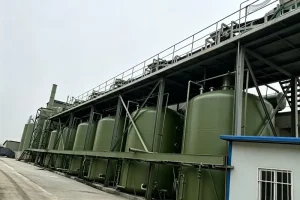
Liquid Calcium Chloride Production Equipment (Namibia Specialized)
View System Specs -
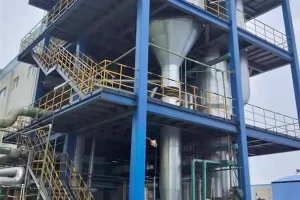
Calcium Chloride Evaporation & Concentration Systems (MVR / Multi-Effect)
View System Specs -
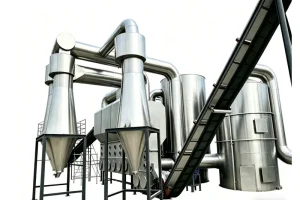
Dihydrate Calcium Chloride Rotary/Fluidized Drying Equipment
View System Specs -
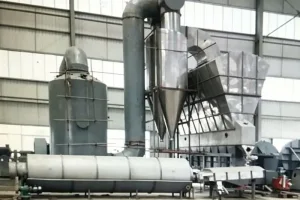
Anhydrous 94% Calcium Chloride High-Temp Calciner & Dryer
View System Specs
Namibia’s Industrial Landscape: The Case for On-Site CaCl₂ Production
From the arid expanses of the Namib Desert to the mineral extraction basins of Erongo and Karas, calcium chloride serves as an indispensable reagent. Localized plant installation radically curtails exorbitant maritime importation overheads.
Mining Haul Road Stabilization
Namibia is home to globally significant open-pit operations, including the Rössing and Husab uranium complexes and rapid-expansion lithium projects. In hyper-arid climates, water-only dust suppression is unviable due to high evaporation rates.
- Hygroscopic Retention: 38% liquid CaCl₂ binds fine aggregates, mitigating abrasive silica dust.
- Water Conservation: Cuts road-spraying fresh water consumption by up to 75% in the Erongo Region.
- Structural compaction of gravel haulage thoroughfares bearing 240-ton dump trucks.
Hydrometallurgy & Lithium Processing
The processing of lepidolite and petalite pegmatite deposits around Karibib and Uis demands precise precipitation and neutralization agents to treat acidic raffinate and tailor electrolyte conductivity.
- Sulfate Scavenging: CaCl₂ dosing converts residual sulfates into high-purity gypsum by-products.
- Brine Exchange: Optimizes specific gravity for solid-liquid counter-current decantation (CCD).
- Recirculates process reagents, enabling Zero Liquid Discharge (ZLD) mining mandates.
Walvis Bay Maritime & Cold Chain Brines
The Port of Walvis Bay and Lüderitz anchor world-class hake, pelagic fish processing, and oyster operations. Secondary refrigerant loops require non-toxic, ultra-low freezing point transfer fluids.
- Eutectic Performance: CaCl₂ brine yields stable cooling down to -50.4°C without toxic ammonia leakage risk in food processing zones.
- Anti-corrosion inhibitors formulated specifically for maritime blast freezers.
- Industrial gas drying and moisture adsorption in coastal logistics warehouses.
Process Flowsheet: From Calcite/Brine Reaction to 94% Anhydrous Prills
Ruitu Automation delivers complete EPC flowsheet customization—addressing aggressive chloride-induced pitting, thermal heat integration, and energy conservation under desert operating conditions.
Digestion & Neutralization
Crushed high-calcium limestone or marble slurry reacts with industrial hydrochloric acid (HCl) in titanium or PTFE-lined continuous stirred-tank reactors (CSTR), controlling pH to 5.5–6.0 to precipitate Fe and heavy metal hydroxides.
Flocculation & Clarification
High-rate Lamella clarifiers paired with corrosion-resistant filter presses remove insoluble silica and barium/strontium sludges, generating an ultra-clear 32%–35% liquid calcium chloride mother liquor.
MVR / Multi-Effect Evaporation
Mechanical Vapor Recompression (MVR) coupled with forced circulation titanium grade 2 / nickel alloy evaporators concentrates liquid CaCl₂ to 68%–70% at optimized thermal coefficients, conserving steam in arid climates.
Granulation & Fluidized Bed
Molten feed is atomized into a fluid-bed spray granulator or flaker drum. Air classification separates uniform dihydrate (74%–77%) or passes particles to an anhydrous rotary calciner for drying to 94%+ spheres.
| System Component | Namibia High-Chloride Harsh Duty Spec | Standard Conventional Specification | Operational Lifetime Advantage |
|---|---|---|---|
| Evaporation Concentrator | Titanium Gr.2 / Inconel 625 / Hastelloy C-276 tubes + vapor chamber | 316L Stainless Steel | Eliminates stress corrosion cracking (SCC); 15+ year operational life |
| Acid Reaction Vessels | Heavy-gauge Q235B shell with virgin fluoropolymer (PTFE / ETFE) lining | FRP (Fiberglass) / Rubber lining | Resists boiling HCl thermal shocks up to 130°C without delamination |
| Granulator Fluid Bed | Titanium-clad distribution plate, variable-speed cyclonic return | Monel clad or 304 SS mesh | Non-sticking prill flow; zero blockage during desert ambient night dips |
| Process Instrumentation | Endress+Hauser / Siemens Tantalum diaphragm pressure sensors, PTFE radar | Standard 316L transmitters | Continuous drift-free slurry and density measurement (±0.001 SG) |
Chinese Manufacturing Precision Meets Namibia Field Resilience
Situated in the heart of China’s chemical equipment corridor in Weifang, Shandong, Ruitu leverages an industrial cluster spanning heavy metallurgy, precision fluoropolymer lining, and smart automation.
Vertically Integrated Weifang Base (28,000 m²)
Unlike trading intermediaries, Ruitu manufactures pressure vessels, MVR evaporators, rotary drums, augers, and PTFE lining in-house under ISO 9001 and ASME Section VIII compliance.
- Single-Point Accountability: Design, static/rotating equipment machining, hydraulic pressure testing, and trial assembly under one roof.
- Pre-Commissioning Guarantee: Factory dry-run testing of drive trains, augers, and spray nozzles prior to maritime crating.
- Direct Port Access: Rapid transit via Qingdao Port directly to the Port of Walvis Bay, reducing freight lead times to 32–38 days.
Modular Skid Engineering for Desert Deployment
Namibian interior transport (B1 and B2 highways) requires strict axle-load compliance and rugged structural frameworks capable of withstanding rough access roads to remote mining sites.
- Plug-and-Produce Skids: Pre-assembled modules complete with piping manifolds, cable trays, and motor control centers (MCC).
- Desert Thermal Hardening: Electric enclosures rated IP66 with vortex air cooling systems to resist ambient dust storms and +45°C ambient spikes.
- Dual Frequency Drives: 380V/525V 50Hz electrical architecture configured to Namibian grid and captive diesel/solar generator microgrids.
Turnkey Namibian EPC: Regulatory Assurance & Site Commissioning
Executing chemical infrastructure in Namibia requires strict alignment with the Environmental Management Act (Act 7 of 2007), the Ministry of Mines and Energy (MME), and the Namibian Standards Institution (NSI).
EIA & Environmental Protection
Our turnkey design integrates closed-loop scrubbers that neutralize acid fumes to <5 mg/Nm³ HCl emission levels, facilitating smooth issuance of Environmental Clearance Certificates (ECC).
Local Operator Empowerment
Chinese installation specialists remain on-site in Namibia post-commissioning for up to 90 days, delivering bilingual SOP manuals and hands-on SCADA automation training to local technicians.
Critical Spares Consignment
We supply standardized 24-month maintenance wear packages (PTFE mechanical seals, titanium impeller spares, conveyor rollers, thermocouple sensors) delivered on-site.
Frequently Asked Questions: Calcium Chloride Plants in Namibia
Comprehensive engineering clarifications addressing feedstocks, energy consumption, logistics, and capital efficiency.
What local Namibian raw materials can be converted into CaCl₂?
The most cost-effective process routes utilize domestic Namibian high-purity limestone or marble quarry fines (widely available around Karibib and Outjo) reacted with industrial hydrochloric acid. Alternatively, our evaporation plants can be configured to process hyper-saline blowdown from coastal reverse osmosis (SWRO) desalination facilities or chemical raffinate from lithium extraction circuits.
How does the equipment withstand extreme coastal corrosion at Walvis Bay?
Our coastal chemical systems utilize dual-layer protection: all wetted inner parts utilize heavy-gauge virgin PTFE/ETFE fluoropolymer linings, Titanium Gr.2, or Hastelloy C-276. External structural steel members receive blast cleaning to Sa 2.5, followed by a high-build zinc-rich epoxy primer and polyurethane topcoat rated for ISO 12944 C5-M extreme marine corrosive classifications.
What heating sources are supported for drying and evaporation in remote regions?
Given electrical grid variations and fuel dynamics in Namibia, Ruitu plants feature multi-fuel adaptability. Thermal air furnaces can operate on heavy fuel oil (HFO), diesel, LPG, biomass briquettes, or hot exhaust gas from captive mining power generation units. In addition, MVR (Mechanical Vapor Recompression) drastically reduces electrical thermal demand by recompressing secondary vapor.
Can the line produce both liquid and solid (flakes/prills) calcium chloride?
Yes. Our modular flowsheets are engineered with an intermediate takeoff station. The facility can deliver 32%–38% concentrated liquid calcium chloride directly into road tankers for dust suppression, while routing the remaining flow through drum flakers or spray fluidized granulators to produce 74% dihydrate flakes or 94% anhydrous prills.
What is the expected delivery and installation timeframe for Namibia?
Custom fabrication and factory testing in Weifang typically take 90–120 days. Ocean freight from Qingdao to Walvis Bay requires approximately 35 days. Site assembly, piping hook-up, electrical wiring, and cold/hot commissioning in Namibia are accomplished within 45–60 days by our field engineering team.
How does on-site production compare economically against importing bagging stock?
Importing bagged CaCl₂ through regional transshipment incurs exorbitant container freight, port demurrage, and handling tariffs, often elevating delivered prices beyond USD $450/ton. Localized production utilizing regional limestone and by-product acid typically achieves production costs below USD $180–$220/ton, amortizing total capital expenditure within 14–18 operational months.
Integrated Equipment & Auxiliary Units for Namibia Projects
Engineered for seamless interoperability across extreme thermal spans, aggressive salt corrosion environments, and heavy-duty particulate transfer demands.
-
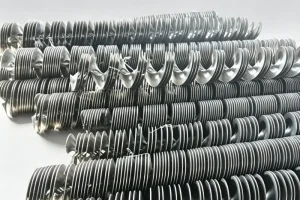
Cold-Rolled Continuous Screw Flight & Heavy Auger Blades (Namibia Mining Grade)
View Component Specs -
Industrial Evaporation & Forced Concentration Hardware (Namibia Installation)
View Component Specs -
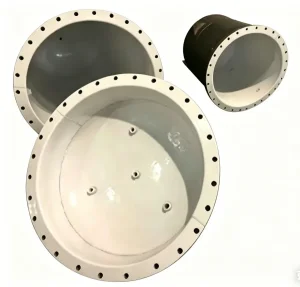
Custom PTFE-Lined Acid Dosing Tank (Anti-Hydrochloric Acid Pitting)
View Component Specs -
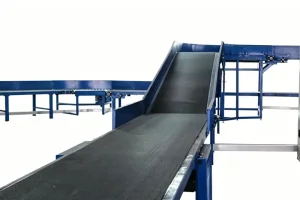
Corrosion-Resistant Industrial Belt Conveyor (Dust-Sealed for Desert Environments)
View Component Specs -
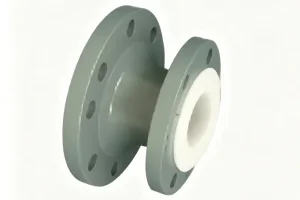
Heavy PTFE-Lined Steel Pipe Reducer & High-Velocity Slurry Fittings
View Component Specs -
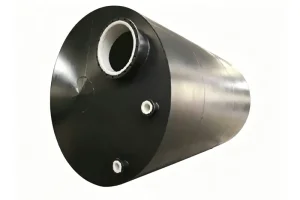
Polypropylene (PP) Lined Brine Storage & Mother Liquor Settling Tank
View Component Specs -
High-Efficiency Anhydrous Drying & Prill Calcining Reactor System
View Component Specs -
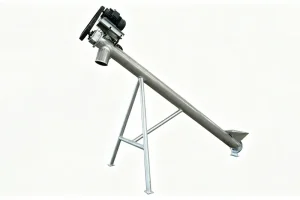
Sealed Screw Conveyor (Auger Feeder) for High-Moisture Chemical Salts
View Component Specs
Initiate Your Calcium Chloride Project in Namibia
Connect directly with Ruitu’s principal process engineers. We evaluate raw feed brine assays, assess local thermal utility constraints, and engineer tailored Turnkey EPC project proposals.
Send Inquiry Now