
Custom One-Time Formed Cold-Rolled Screw Flight | Harvester Auger Blade Products, Service
Product Description
Product Overview
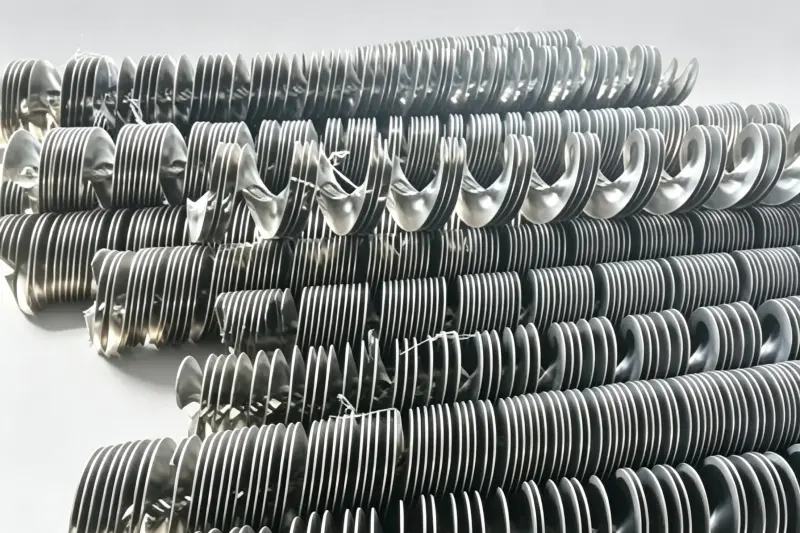
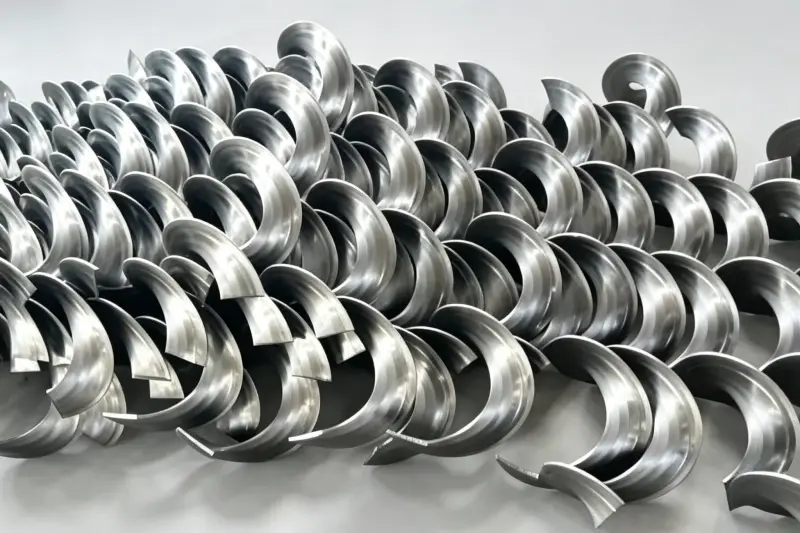
Our one-time formed cold-rolled screw flight, also widely known as harvester auger blade, is manufactured through a continuous cold rolling process with seamless integral forming. As a core component of conveying and mixing machinery, this product features a smooth, wear-resistant surface and exceptional structural integrity without any intermediate weld seams. It serves as a critical wearing part for agricultural harvesting equipment, industrial conveying systems, construction mixing machines and mining extraction machinery. Through precision cold working, the blade surface obtains a work hardening effect, significantly extending service life and reducing equipment maintenance downtime. Our production line supports adjustable rolling parameters, enabling flexible manufacturing of screw flights in multiple specifications to match diverse equipment configurations.
Core Manufacturing Process
Our cold-rolled screw flight adopts advanced continuous strip rolling technology. High-quality raw steel strip is fed into the precision rolling mill at a constant speed, undergoing one-time continuous plastic deformation under controlled pressure and speed. Unlike segmented welded blades, this forming process creates an integral helical structure with no weld joints along the entire length, eliminating the risk of weld fracture under heavy load or long-term operation.
For the matching screw shaft, we apply finish turning to both shaft heads after welding. This post-welding precision machining strictly guarantees the coaxiality of the two shaft ends, avoiding eccentric wear and abnormal vibration during high-speed rotation. Every finished auger assembly undergoes strict dynamic and static balance testing before delivery, effectively reducing overall equipment vibration, lowering operating noise and improving whole-machine stability.
Material Options & Performance Comparison
We provide three mainstream material options to adapt to different working conditions and budget requirements. The cold rolling process imparts a work hardening effect to carbon steel blades, increasing their surface hardness and wear resistance by 2–3 times compared with ordinary formed blades.
| Material Type | Surface Hardness (After Cold Rolling) | Typical Application Scenarios |
|---|---|---|
| Carbon Steel | Improved by 2–3 times via work hardening | Agricultural harvesters, grain conveying, general industrial conveying |
| 304 Stainless Steel | Stable medium hardness | Food processing, chemical conveying, wet & corrosive environments |
| 65Mn High Carbon Steel | High hardness with superior toughness | Heavy-load mining machinery, high-strength mixing equipment, high-wear conditions |
Standard Specification Parameters
Our cold rolling equipment supports flexible adjustment to produce screw flights covering a wide range of specifications. The table below shows the conventional producible parameter range, and non-standard sizes can be customized according to customer drawings.
| Parameter Item | Conventional Range | Remarks |
|---|---|---|
| Flight Outer Diameter | 50 mm – 600 mm | Adjustable per customer requirements |
| Flight Inner Diameter | 20 mm – 250 mm | Matches corresponding screw shaft diameter |
| Screw Pitch | 30 mm – 500 mm | Equal pitch or variable pitch available |
| Raw Material Thickness | 2 mm – 12 mm | Selected by load and wear requirements |
| Single Piece Length | Up to 6 meters | Longer lengths available via butt joint |
| Helix Direction | Right-hand / Left-hand | Right-hand as standard, left-hand customizable |
Key Product Advantages
Continuous one-time rolling forming with no weld seams on the working surface avoids stress concentration at welds and greatly improves overall structural strength.
The cold work hardening effect on carbon steel blade surfaces increases hardness and wear resistance by 2–3 times, significantly prolonging service life and reducing replacement frequency.
The rolled surface is smooth and flat with low material conveying resistance, reducing material blockage and improving conveying efficiency.
Post-welding finish turning of shaft heads ensures precise coaxiality, and dynamic-static balance testing effectively suppresses equipment vibration during operation.
The dedicated rolling mill can be quickly debugged to produce blades of different diameters, pitches and thicknesses, adapting to various equipment models.
Application Fields & Compatible Equipment
| Industry Category | Typical Equipment | Core Function of Screw Flight |
|---|---|---|
| Agricultural Machinery | Combine harvesters, grain augers, feed mixers | Conveying grains, straw and feed; material lifting and transfer |
| Industrial Conveying | Screw conveyors, bucket elevators, dosing feeders | Continuous conveying of powder, granular and bulk materials; quantitative feeding |
| Construction Engineering | Concrete mixers, mortar conveying equipment, sand & stone conveying systems | Mixing and conveying cement, mortar, aggregate and other building materials |
| Mining & Metallurgy | Mine conveying machinery, ore lifting equipment, mineral powder mixers | Conveying and lifting ore, mineral powder and other heavy abrasive materials |
| Environmental Protection | Sludge conveying equipment, waste treatment screw machines, dust removal systems | Conveying sludge, solid waste and dust in environmental protection processes |
Frequently Asked Questions (FAQ)
What are the main benefits of cold-rolled continuous flights over sectional flights?
Cold-rolled continuous flights are formed seamlessly in one operation without welds, eliminating joint weak spots. In addition, the cold rolling process creates work hardening that enhances surface wear resistance by 2 to 3 times compared to sectional welded flights.
Can you customize screw flight dimensions according to specific requirements?
Yes, our rolling parameters are adjustable to manufacture outer diameters from 50 mm to 600 mm, custom inner diameters, variable pitches, thicknesses from 2 mm to 12 mm, and left-hand or right-hand configurations based on client specifications.
How is vibration minimized on high-speed auger assemblies?
We perform finish turning on both shaft heads after welding to ensure precise coaxiality, followed by rigorous dynamic and static balancing tests before delivery to keep operating vibration and noise to a minimum.
Which material should I choose for abrasive or corrosive applications?
For highly abrasive environments such as mining or concrete processing, 65Mn high carbon steel offers optimal hardness and toughness. For corrosive or food-grade applications, 304 stainless steel provides excellent chemical and rust resistance.
What is the standard piece length available for shipment?
A single cold-rolled flight piece can be produced up to 6 meters in continuous length. Longer systems can be extended via butt joint connections to meet equipment specifications.








