
Custom Calcium Chloride Evaporation & Concentration Equipment Factories, Products
Product Description
| Raw Material Type | Concentration Range | Recommended Evaporation Process | Target Output Concentration |
|---|---|---|---|
| Dilute Calcium Chloride Solution | 20%-35% (20-40 Baume degrees) | MVR Evaporator | 40%-50% |
| Medium-Concentration Solution | 35%-40% | Triple-Effect Evaporator | 60%-65% |
| High-Concentration Feed | 40%-60% | Single-Effect Evaporator | ≥70% |
| Calcium Chloride-Containing Wastewater | 15%-30% | Combined MVR + Crystallization System | Solid Salt Recovery |
| Step No. | Operation Link | Process Parameters | Core Function |
|---|---|---|---|
| 1 | Raw Material Preheating | Temperature raised to 70-80℃ using condensed water heat | Reduce heating load and energy consumption |
| 2 | Forced Circulation Evaporation | Vacuum degree -0.08MPa, evaporation temperature 85℃ | Concentrate solution to 40%-50% |
| 3 | Vapor Recompression | Compressor pressure ratio 1.8-2.2, steam temperature 110℃ | Reuse secondary steam as heating source |
| 4 | Condensate Recovery | Condensed water temperature ≥90℃, reused for preheating | Maximize heat energy recovery |
| 5 | Concentrated Solution Discharge | Stable concentration monitoring, automatic discharge | Ensure consistent product quality |
| Step No. | Operation Link | Process Parameters | |
|---|---|---|---|
| 1 | Material Feed to Third Effect | Vacuum degree -0.09MPa, temperature 65℃ | Initial concentration using low-grade heat |
| 2 | Sequential Transfer to Second/First Effects | Vacuum degree -0.08MPa (second effect), -0.06MPa (first effect) | Gradual concentration through cascade heat utilization |
| 3 | External Steam Heating (First Effect) | Steam pressure 0.2MPa, temperature 120℃ | Provide primary heat source for the system |
| 4 | Secondary Steam Cascade Utilization | First effect → second effect → third effect | Reduce overall steam consumption by 65% |
| 5 | Concentration to 60%-65% | Automatic density monitoring and discharge | Prepare for final single-effect concentration |
| Advantage Category | Specific Performance |
|---|---|
| Strong Raw Material Adaptability | Configurable processes for different concentration ranges (20%-60%), compatible with calcium chloride solutions and wastewater |
| High Production Efficiency | MVR system achieves 4t/h evaporation capacity; triple-effect system supports 10-50t/h continuous operation with automatic control reducing manual intervention |
| Controllable Energy Consumption | MVR evaporator consumes only 0.12t steam per ton of water evaporation; triple-effect system reduces energy use by 65% compared to single-effect systems |
| Up-to-standard Product Purity | Forced circulation design and precision filtration remove impurities; concentrated solution purity ≥99.5% meets industrial-grade requirements |
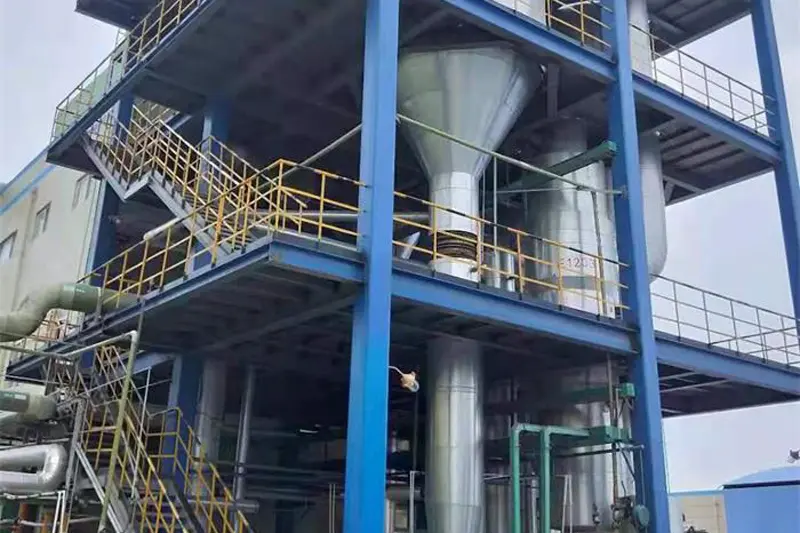
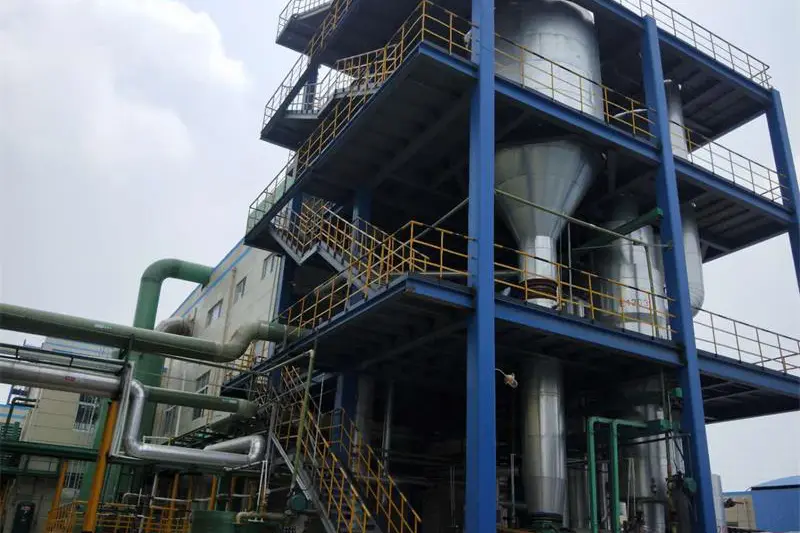
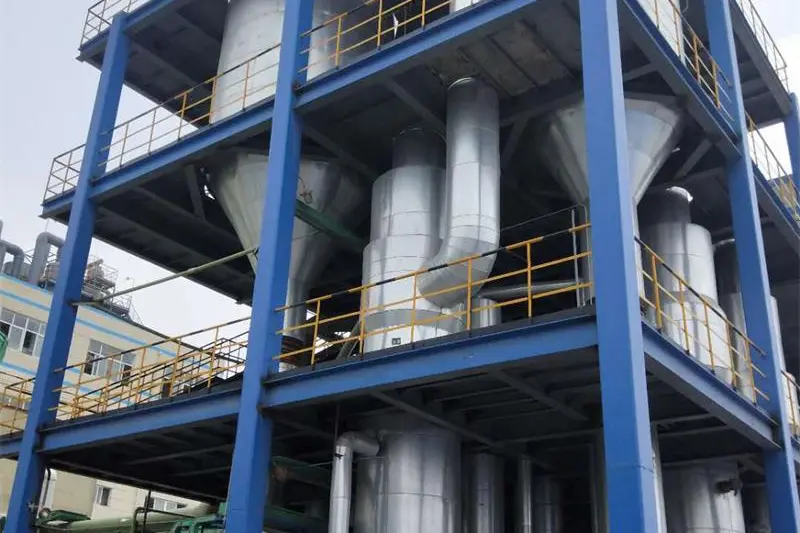
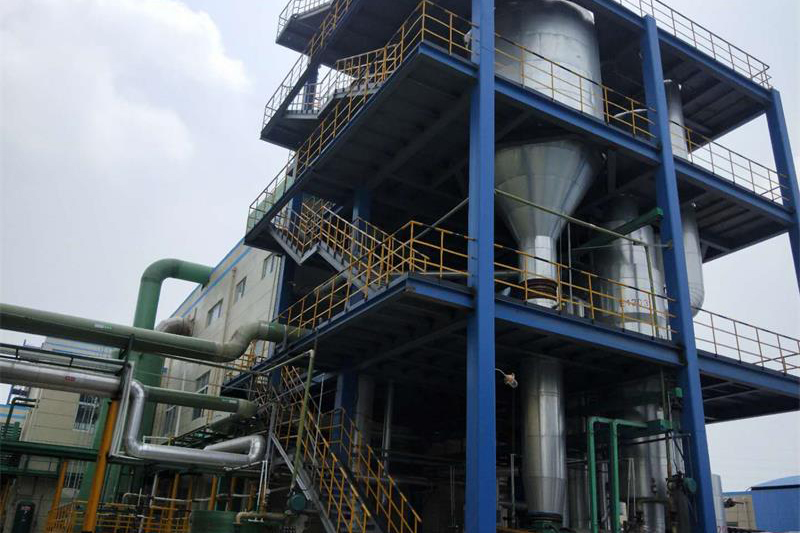
The system utilizes customized single-effect and forced circulation configurations to achieve high-concentration output reaching ≥70%, ideal for direct feed into downstream crystallization or flaking processes.
Key contact parts and heat exchanger tubes are manufactured with high-grade anti-corrosive materials such as titanium (TA2) or duplex stainless steel (2205), specifically optimized for hot chloride environments to extend operational life.
For solutions between 20%-35% concentration, the boiling point elevation is moderate, making MVR significantly more energy-efficient by compressing and reusing secondary vapor, which reduces external steam requirements by over 90%.
A forced circulation flow dynamics design maintains a high liquid velocity inside the heating tubes, effectively scouring the surface and inhibiting salt precipitation and scale formation.
Yes, the system is designed to treat wastewater with 15%-30% calcium chloride, providing integrated concentration and zero-liquid-discharge (ZLD) crystallization to recover valuable solid industrial salts.









