
Core Separation & Refining Systems
Precision Salt Washing & Packaging Architecture for Larnaca
Engineered for extreme salinity regimes, rapid mechanical recovery, and food-grade purity standards in compliance with EU Directive 98/83/EC and Codex Alimentarius CXS 150-1985.
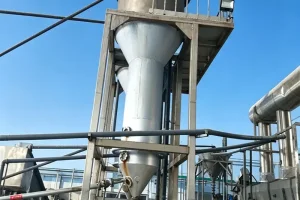
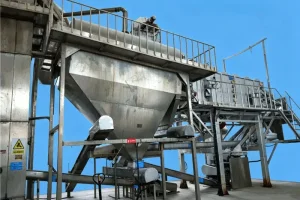
Larnaca Heavy Industrial Multi-Stage Salt Washing Line (Turnkey)
Configure System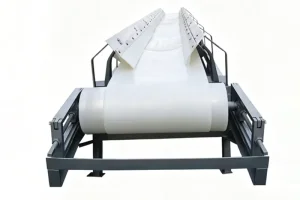
Larnaca Anti-Corrosive Wear-Resistant Food-Grade Conveying Line
Configure System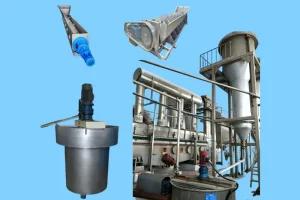
Larnaca Industrial & Edible Salt Water Purification Equipment
Configure System99.85%
Achievable NaCl Purity
< 0.05%
Residual Insoluble Impurities
35%
Water Conservation via Loop Wash
50,000+ h
Mean Time Between Failures (MTBF)
Market Economics & Logistics Analysis
The Larnaca Salt Ecosystem: Heritage, Seawater Brines & Maritime Trading
Balancing historical natural wetlands, modern coastal seawater desalination infrastructure, and strategic transshipment channels in the Eastern Mediterranean basin.
1. Geo-Industrial Baseline: From Historical Salt Lakes to Desalination Effluent Mining
Larnaca has occupied a prominent place in the annals of Mediterranean salt harvesting since antiquity, anchored by the iconic Larnaca Salt Lake complex (Alyki). While seasonal commercial extraction within the lake itself has transitioned toward conservation frameworks (Natura 2000 network), Cyprus has rapidly expanded its industrial dependence on seawater reverse osmosis (SWRO) desalination facilities to maintain municipal and agricultural water security. SWRO plants surrounding Larnaca and Dhekelia discharge vast quantities of hypersaline brine (total dissolved solids exceeding 65,000–70,000 ppm) back into the sea.
This creates a significant circular economy opportunity: Brine Extraction & Salt Purification Valorization. Rather than treating reject brine purely as an environmental concern, forward-looking engineering enterprises in Larnaca are exploring zero-liquid discharge (ZLD) integration and mechanical salt harvesting lines. To transform high-sulfate, high-magnesium marine crude salt or desalination concentrates into commercial grade chlor-alkali feedstock, de-icing salt, or premium culinary product, state-of-the-art multi-stage hydro-washing machinery is essential.
2. The Refining Imperative: Overcoming Mediterranean Marine Impurity Profiles
Crude salt recovered from warm Mediterranean marine lagoons or solar crystallizers in the Levantine basin carries a unique spectrum of contaminants: insoluble windblown terrigenous dust, calcium sulfate (gypsum), magnesium sulfate (Epsom salts), and magnesium chloride bitterns. Left unwashed, the presence of hygroscopic Mg²⁺ and Ca²⁺ impairs flowability, clogs pneumatic distribution systems, and degrades purity to sub-96% NaCl.
Ruitu Automation’s water-washing technology relies on dynamic hydro-cyclone classification, fluidized counter-current liquid-solid scrubbing, and controlled shear dissolution. By washing with saturated brine, NaCl crystal dissolution is minimized while soluble magnesium and calcium chlorides are selectively stripped from the crystal interfaces.
| Analytical Parameter | Raw Solar / SWRO Concentrates | Post Hydro-Washing Stage | Refined & Screened Final Yield |
|---|---|---|---|
| NaCl Content (%) | 94.5% – 96.8% | 98.8% – 99.2% | 99.80% – 99.92% |
| Magnesium Ion (Mg²⁺) | 0.45% – 0.85% | 0.08% – 0.12% | < 0.015% |
| Calcium Ion (Ca²⁺) | 0.30% – 0.60% | 0.06% – 0.09% | < 0.020% |
| Sulfate Radical (SO₄²⁻) | 0.80% – 1.40% | 0.15% – 0.22% | < 0.050% |
| Insoluble Matter (Sand/Clay) | 0.25% – 0.70% | 0.02% – 0.04% | < 0.005% (Pharmaceutical/Food Grade) |
Architectural Roadmap
Engineering Roadmap: Salt Refining Process Chain
A closed-loop, low-energy thermodynamic and mechanical sequence delivering reliable output with minimal utility footprints.
Phase 1: Shear Crushing & Bittern Stripping
Double-roll crushing systems reduce crystal agglomerates to homogenous 2–4mm fractions without producing excessive micro-fines. Crude salt is mixed with concentrated saturated brine in counter-current washing troughs, scrubbing inter-crystalline mother liquor without dissolving the primary salt matrix.
Phase 2: Hydro-Extraction & Centrifugal Dewatering
Two-stage pusher centrifuges (or continuous horizontal basket decanters) separate washed crystals from the wash liquor under high centrifugal force (G-factors > 800). Moisture contents are reduced from over 25% slurry down to 2.5–3.5% wet cake, slashing downstream thermal drying energy.
Phase 3: Fluidized Drying & Multi-Level Grading
Vibrating fluidized bed dryers utilizing clean indirect heat from industrial hot air furnaces drive moisture down to ≤ 0.1%. Integrated multi-deck screens segregate fine table salt, coarse culinary flakes, and industrial crystals before automated robotic bagging or bulk container loading.
Industry 4.0 Advanced Manufacturing
Why Global EPC Contractors Choose Ruitu Automation
Combining heavy-industry coastal heritage in Weifang with robotic precision welding, composite anti-corrosion linings, and robust supply continuity.
Corrosion Metallurgy & PTFE / PO Lining
Seawater and high-temperature brine rapidly corrode standard steels. Our Weifang factory integrates certified ISO 9001 pressure vessel fabrication with rotomolded PO/PE and isostatically pressed PTFE linings, extending unit life across pumps, piping, and separation vessels to over 15 years.
Factory 4.0 Pre-Assembly & Cold Testing
Every complete washing train is test-assembled and hydro-tested across our 28,000 m² workshop before export packaging. Laser alignments, sensor calibrations, and PLC scada simulations ensure that commissioning times on overseas sites like Larnaca are reduced by up to 45%.
Unrivaled Supply Chain Speed & Parts Logistics
Positioned near Qingdao Port, Ruitu leverages China’s concentrated chemical engineering supply chain. We maintain direct stock of pusher centrifuges, helical flights, lined valves, and gear reducers, shipping breakbulk or containerized cargo directly to the Port of Limassol and Larnaca terminals.
Integrated Equipment Portfolio
High-Performance Components for Salt Refining Lines
Built for continuous duty in heavy industrial salt operations, corrosive brines, and chemical crystallization plants.
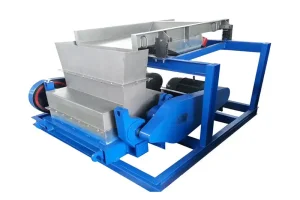
Larnaca Double Roll Heavy Salt Crusher for Washing Lines
Configure System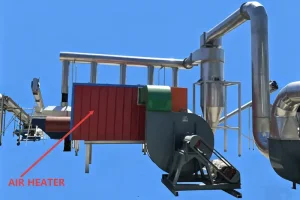
Larnaca Thermal Salt Drying Machinery (Fluidized Bed Systems)
Configure System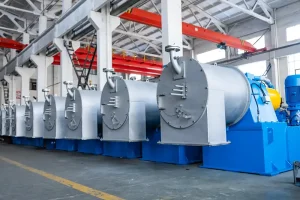
Larnaca Double Stage Piston Pusher Centrifuge for Dewatering
Configure System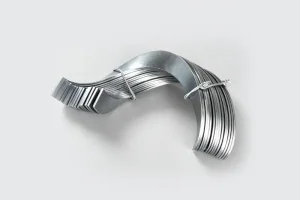
Larnaca Equal-Thickness Segmental Screw Flight Blades
Configure System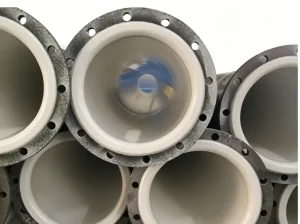
Larnaca High-Duty PO/PE Lined Anti-Corrosion Brine Pipe
Configure System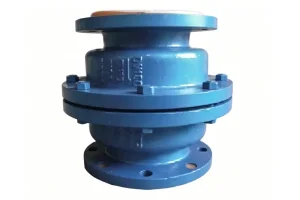
Larnaca Fluoropolymer PTFE-Lined Acid & Brine Check Valves
Configure System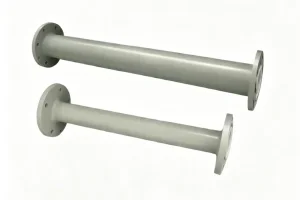
Larnaca Heavy-Duty PTFE Lined Steel Chemical Pipe
Configure System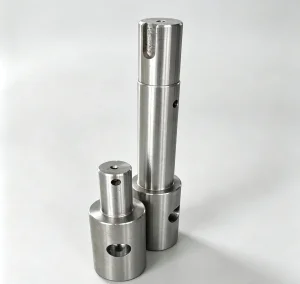
Larnaca Flexible Screw Conveyor Auger Drive Shaft Head
Configure System
Strict European Compliance
Meeting EU Directives & Cyprus Environmental Standards
Reliable operations require equipment that seamlessly complies with local safety, environmental, and food hygiene legislation.
CE Machinery Directive (2006/42/EC)
Every electrical cabinet, automated screen, conveyor interlock, and centrifuge produced by Ruitu is designed and marked in conformity with the EU Machinery Directive, Low Voltage Directive (2014/35/EU), and EMC standards (2014/30/EU), easing Cypriot regulatory approvals.
Food Contact Certification (EC 1935/2004)
Where lines are commissioned for edible table salt processing, all contact surfaces—from SUS316L centrifuge baskets and fluid bed air distributors to food-grade PVC/PU conveyor belts—hold material test certifications satisfying European food safety regulations.
Cyprus Department of Environment (ZLD Goals)
Recognizing the fragile hydrology around Larnaca Bay, our wash liquor recycling systems utilize clarification thickeners and closed-circuit brine clarification. This recirculates up to 92% of the wash brine, minimizing environmental discharge into coastal marine ecosystems.
Clarifications & Specifics
Frequently Asked Questions: Larnaca EPC Delivery
Addressing engineering scope, delivery schedules, logistics to Cyprus ports, and mechanical guarantees.
What feedstock types can Ruitu salt washing lines process in the Larnaca context?
Our lines are engineered to process crude marine solar salt, rock salt, concentrated brines from seawater reverse osmosis (SWRO) desalination plants, and chemical bittern salts. System parameters such as crushing clearance, brine wash ratios, and centrifugal speeds are tailored to your feedstock's exact calcium, magnesium, and sulfate profile.
How does the machinery resist high salinity and Mediterranean maritime humidity?
We use high-grade metallurgy (SUS316L, 2205 Duplex stainless steel, Titanium Gr. 2 where specified) for wet process zones, alongside heavy-duty isostatic PTFE linings and rotomolded PO/PE pipes. Carbon steel frames undergo multi-layer marine epoxy painting (C5-M environment certified) to resist high ambient humidity and saline airborne conditions common in Larnaca.
What is the logistical transit time and commissioning roadmap for Cyprus?
Equipment manufactured at our Weifang facility is crated for export and shipped through Qingdao port directly to the Port of Limassol or Larnaca, typically arriving within 26 to 34 days of voyage. Our engineers handle customs clearance documentation, on-site mechanical assembly, cold dry testing, wet feed testing, and operator training until target throughput and purity are achieved.
Can the line simultaneously produce food-grade table salt and chemical chlor-alkali grade?
Yes. By incorporating variable-speed crushers, bypass dewatering loops, and multi-tier vibrating screen decks, the processing train can switch between fine edible table salt (with iodine/anti-caking addition modules) and coarse, high-purity industrial grade (> 99.8% NaCl) for chlor-alkali electrolysis or water-softening briquette fabrication.
How does Ruitu provide ongoing spare parts and technical service after installation?
We offer 24/7 remote SCADA diagnostic support for all automated lines. In addition, critical wearing parts (centrifuge screen baskets, PTFE gaskets, conveyor scraper blades, and auger flight sections) can be consigned in local buffer stock in Cyprus, or dispatched via air freight with typical 72-hour on-site arrival.