
Custom Equal-Thickness Segmental Screw Flight | Single-Piece Helical Blade Factory, Products
Product Description
Product Overview
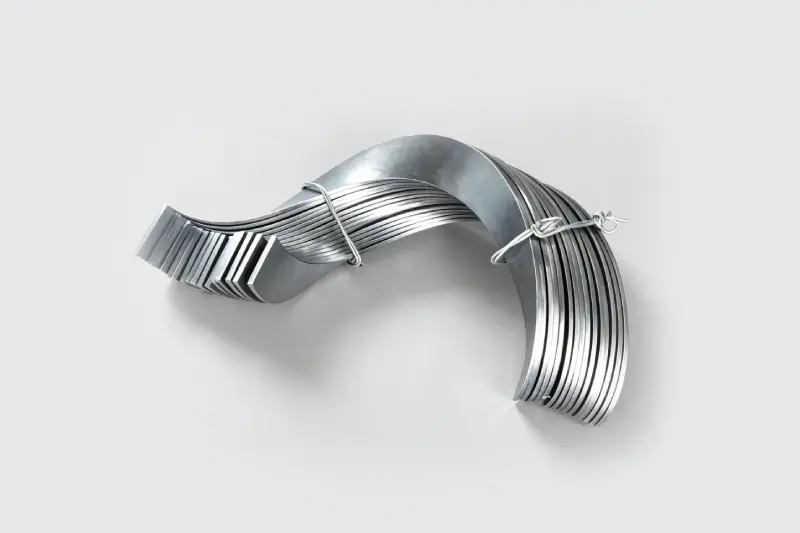
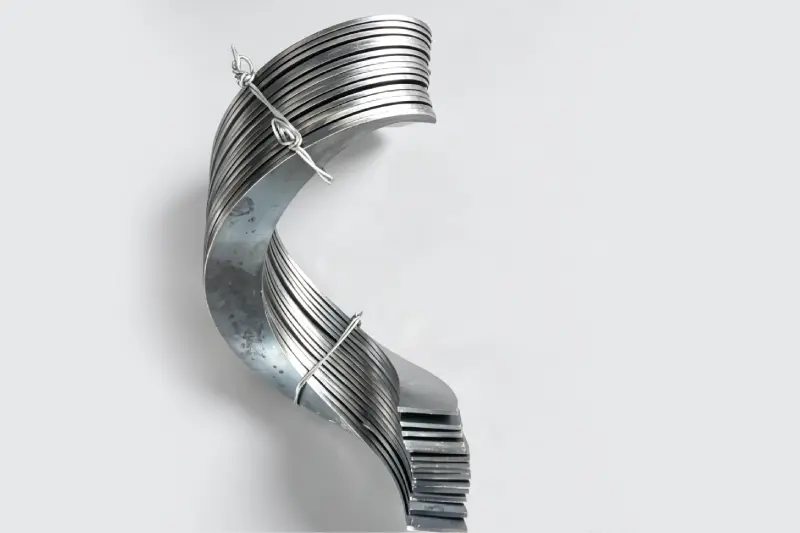
Our equal-thickness segmental screw flight, also known as single-piece uniform-thickness helical blade, is a heavy-duty conveying core component manufactured through precision single-piece cold forming technology. Each independent blade piece maintains fully consistent thickness across the entire working surface, with accurately machined inner bore and outer diameter edges. Multiple single-piece flights can be butt-welded end to end to form a complete continuous screw assembly, making it an ideal solution for heavy-load conveying, vertical lifting and industrial mixing equipment.
Widely adopted in screw conveyors, bucket elevators, mixing machines and mining conveying systems, this product delivers outstanding structural strength and reliable wear resistance. Compared with continuously rolled thin-gauge flights, the single-piece equal-thickness design performs far better in large-diameter, thick-wall and heavy-load working conditions. It supports flexible on-site assembly and partial segment replacement, greatly reducing equipment maintenance cost and production downtime. Our production line covers an extensive size range, with multiple material options available to satisfy diversified industrial demands and complex working environments.
Material & Manufacturing Features
This screw flight is produced via dedicated single-piece cold stamping and precision rolling process. High-quality raw steel plate is fed into CNC forming dies or professional rolling equipment, undergoing one-time accurate plastic deformation to obtain a standard helical shape with perfectly uniform wall thickness. Unlike stretched tapered blades, the equal-thickness structure ensures consistent mechanical strength from inner edge to outer edge, eliminating premature wear and fracture risks at thin weak sections.
Each blade piece is precisely trimmed at both inner and outer diameters, with standard beveled edges reserved at butt joints to ensure full penetration welding and smooth joint transition after assembly. The finished blade presents a flat, smooth working surface with low material adhesion, effectively reducing conveying resistance and preventing material blockage during long-term continuous operation.
Standard Specification Parameter Table
| Material Grade | Surface Hardness | Typical Working Conditions | Cost Level |
|---|---|---|---|
| Carbon Steel (Q235/Q345) | Medium, enhanced by cold working | General industrial conveying, grain lifting, sand processing | Economical |
| 304 Stainless Steel | Stable medium hardness | Food processing, chemical conveying, wet corrosive scenarios | Medium |
| 316L Stainless Steel | Stable medium hardness | Pharmaceutical, marine engineering, strong corrosive media | High |
| 65Mn High Carbon Steel | High surface hardness | Heavy-load mining, high-wear conveying, mixing equipment | Medium-high |
Technical Performance Parameter Table
| Parameter Item | Conventional Production Range | Tolerance Standard | Remarks |
|---|---|---|---|
| Flight Outer Diameter | 100 mm – 1500 mm | ±1.5 mm | Larger custom sizes available |
| Flight Inner Diameter | 30 mm – 800 mm | ±1.0 mm | Matches corresponding shaft diameter |
| Blade Thickness | 3 mm – 30 mm | ±0.2 mm | Fully equal thickness across full blade |
| Screw Pitch | 80 mm – 1200 mm | ±1.0 mm | Equal pitch standard, variable pitch customizable |
| Helix Direction | Right-hand / Left-hand | — | Right-hand as default configuration |
| Single Piece Lead Angle | 10° – 35° | — | Determined by OD and pitch parameters |
| Butt Joint Form | Bevel butt weld | — | Smooth transition after on-site welding |
Core Product Advantages
Fully consistent thickness from inner bore to outer edge ensures even mechanical strength and uniform wear consumption, completely eliminating weak points caused by thickness variation.
Precision die forming guarantees stable outer diameter, inner diameter and pitch parameters, ensuring smooth butt joint and reliable coaxiality after complete assembly.
Four mainstream material options cover general conveying, anti-corrosion and heavy-load wear-resistant working conditions, supporting flexible selection per actual demands.
Modular single-piece design supports on-site welding assembly and local replacement of damaged segments, significantly lowering maintenance cost and equipment downtime.
The formed blade surface is flat and burr-free, with low material conveying resistance and low adhesion, effectively improving overall conveying efficiency.
The process supports production of extra-large diameter and extra-thick blades, perfectly filling the gap that the continuous rolling process cannot cover.
Application Fields & Compatible Equipment
| Industry Sector | Typical Application Equipment | Core Function of Screw Flight |
|---|---|---|
| Bulk Material Conveying | Screw conveyors, shaftless conveyors, inclined lifting machines | Horizontal, inclined or vertical conveying of powder, granular and bulk materials |
| Mining & Metallurgy | Mine hoisting conveyors, ore powder mixers, slag conveying equipment | Conveying and lifting abrasive ore, slag and mineral powder under heavy load |
| Chemical & Environmental | Chemical dosing conveyors, sludge conveyors, dust removal screw machines | Conveying corrosive chemical materials, sludge and dust with anti-clogging performance |
| Food & Feed | Food-grade conveyors, feed mixers, grain processing equipment | Hygienic conveying and uniform mixing of food raw materials and feed products |
| Construction Engineering | Concrete mixers, mortar conveying equipment, sand & stone conveying systems | Mixing and conveying cement, mortar, aggregate and other building materials |
Frequently Asked Questions (FAQ)
What is the difference between equal-thickness segmental flights and continuous cold-rolled flights?
Continuous cold-rolled flights feature a tapered thickness profile where the outer edge is thinner than the inner edge. In contrast, equal-thickness segmental screw flights maintain uniform wall thickness from the inner bore to the outer diameter, offering superior mechanical rigidity, wear resistance, and the capability to be manufactured in significantly larger diameters and thicker steel plates.
How are segmental screw flights assembled into a complete screw shaft?
Single-piece segmental flights are mounted sequentially onto the central core shaft or tube. The standard beveled ends are butt-welded together to form a continuous helical blade, followed by welding the flight root directly onto the shaft for full structural transmission.
Can you produce custom pitch dimensions or variable pitch designs?
Yes. While standard configurations maintain an equal pitch equal to the outer diameter, our CNC forming tooling allows for customization of non-standard pitches, variable pitches for feeder screws, and dual-hand rotation requirements.
Which material is best suited for abrasive mineral and mining applications?
For abrasive materials like ore, slag, and aggregates, high-carbon alloys such as 65Mn or heavy-duty carbon steels (Q345) provide elevated hardness and long service wear resistance compared to standard commercial mild steels.
What information is required to order or quote custom screw flights?
To configure flights accurately, provide the flight Outer Diameter (OD), Inner Diameter / Shaft Diameter (ID), Pitch (P), Blade Thickness (T), Helix Direction (Right-hand or Left-hand), and the intended Material Grade.









