
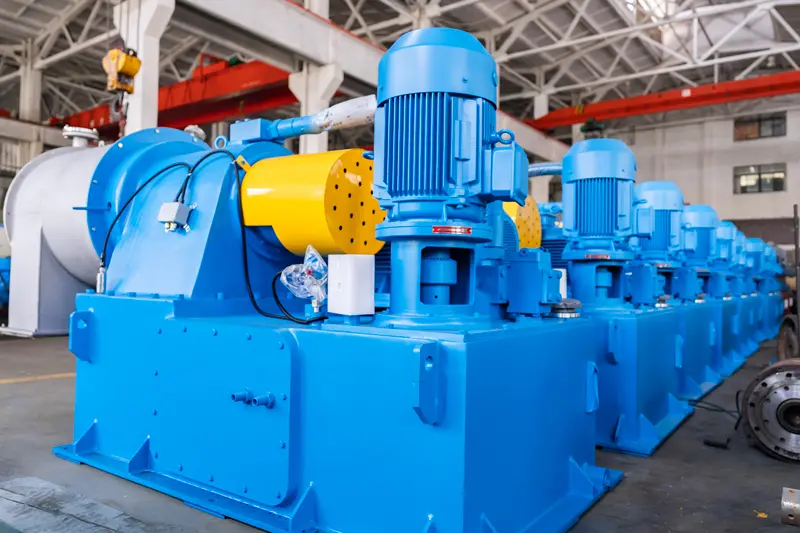
Custom Double Stage Piston Pusher Centrifuge Product, Products
Product Description
Product Overview
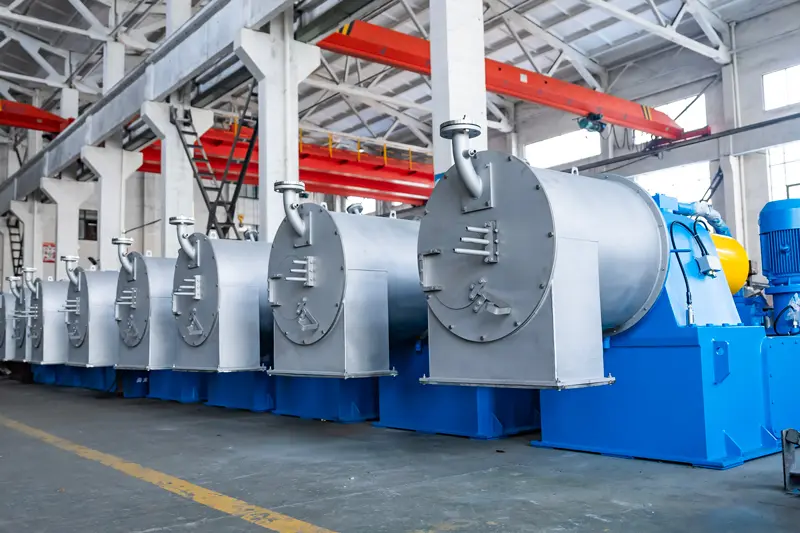
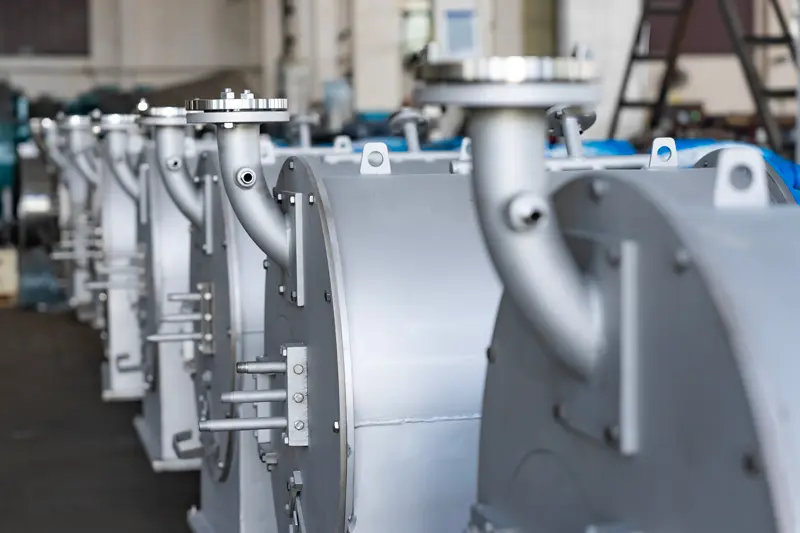
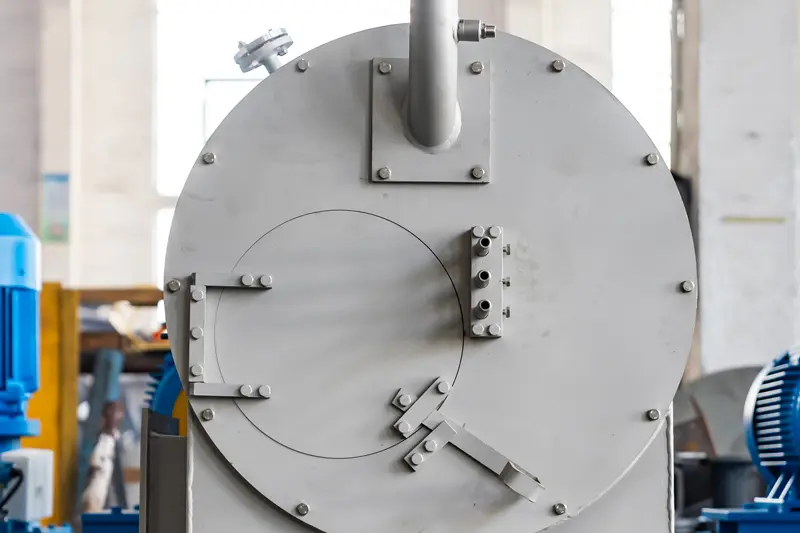
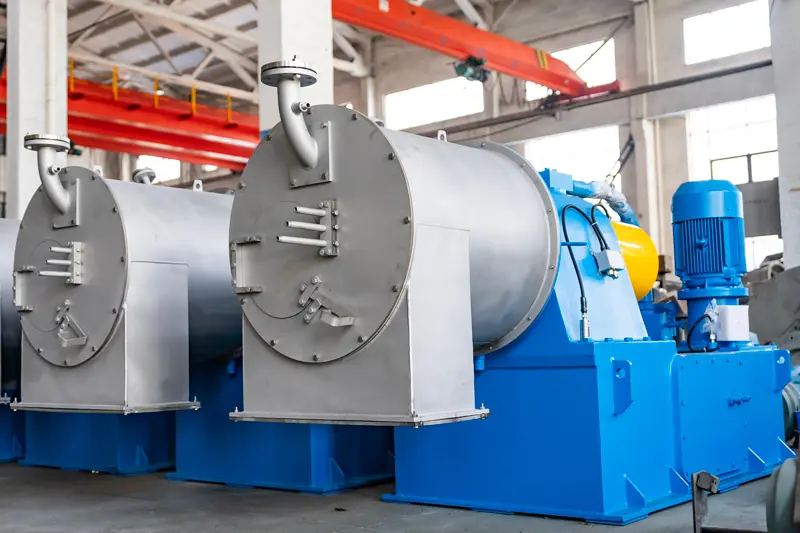
The Double stage piston pusher centrifuge is a horizontal continuous filtering centrifuge with a coaxial two-stage bowl structure. It performs fully automatic feeding, uniform distribution, primary separation, secondary deep dewatering, optional cake washing and continuous discharging at full rotating speed without shutdown. Wetted components can be customized with 304/316L stainless steel, duplex steel or titanium alloy to adapt to corrosive working conditions. As core separation equipment for large-scale industrial production, it is widely used for crystalline and granular solid-liquid separation in salt chemical, fertilizer, food, pharmaceutical and mining industries.
Suitable Materials & Application Scope
| Industry | Typical Materials | Feed Adaptation Requirements |
| Salt Chemical | Sodium chloride, ammonium chloride, ammonium sulfate, calcium chloride, magnesium chloride | Solid particle size ≥0.08mm, feed suspension concentration 30%-60% |
| Fertilizer | Urea, potassium sulfate, compound fertilizer crystals | Stable solid content, free of large hard impurities and winding fibers |
| Chemical | Organic salts, inorganic salts, chemical intermediate crystals | Custom anti-corrosion materials available for aggressive media |
| Food & Pharmaceutical | Citric acid, food additives, API crystals | Sanitary-grade 316L configuration for clean production standards |
| Mining & Environment | Mine tailings, industrial by-product salt, sludge dewatering | Uniform solid particles, moderate viscosity, no long fiber impurities |
Working Principle
Driven by the main motor, the inner and outer bowls rotate coaxially at high speed to generate a stable centrifugal force field inside the equipment. The hydraulic system drives the inner bowl to reciprocate axially to realize continuous material conveying and two-stage gradient separation. The feed suspension is continuously delivered into the inner bowl for initial solid-liquid separation, then pushed into the outer bowl for secondary deep dewatering. The final dewatered filter cake is discharged continuously, while mother liquor and washing liquid can be collected separately through independent chambers.
Refined Working Procedures
| Step | Procedure Name | Detailed Operation | Core Function |
| 1 | Uniform Distribution | Suspension is fed to the distributor plate and evenly spread on the inner bowl screen wall | Ensures uniform filter cake thickness and stable separation performance |
| 2 | Primary Separation | Liquid passes through the screen and bowl holes to the mother liquor chamber; solids are intercepted to form a filter cake layer | Removes most free moisture and completes initial solid-liquid separation |
| 3 | Cake Conveying | Hydraulic piston drives the inner bowl to reciprocate, pushing the cake gently to the outer bowl | Delivers material continuously with extremely low crystal breakage rate |
| 4 | Secondary Dewatering | Material is automatically loosened in the outer bowl for secondary centrifugal dewatering | Further reduces cake moisture content and improves final drying effect |
| 5 | Optional Cake Washing | Washing liquid sprays onto the cake to displace residual mother liquor, discharged separately | Improves product purity and enables classified filtrate recovery |
| 6 | Continuous Discharging | Cake is pushed toward the discharge end and discharged through the scraper trough uninterruptedly | Realizes non-stop production with high processing efficiency |
Core Advantages
| Advantage Category | Technical Feature | Customer Value |
| High Continuous Productivity | Full-speed continuous operation without shutdown for discharging | Max capacity up to 50T/H, reduces labor cost and improves production efficiency |
| Superior Separation Effect | Two-stage gradient separation with automatic cake loosening | Lower cake moisture, higher solid recovery rate, less solid loss in mother liquor |
| Low Crystal Damage | Gentle reciprocating piston pushing, no high-speed scraping impact | Maintains high crystal integrity, suitable for products with strict particle size requirements |
| Stable & Low Energy Consumption | High-precision dynamic balance, rigid base, stable power output | Low vibration and noise, no peak power load, reduces long-term operation cost |
| Wide Material Adaptability | Adjustable speed, pusher frequency and screen gap, multiple material options | Adapts to various materials with different particle sizes and corrosion properties |
| Easy Automation Control | Compatible with speed, temperature and pressure monitoring, supports DCS access | Reduces manual intervention, ensures stable and safe long-term operation |
Full Technical Specifications
| Parameter | HR300 | HR400 | HR420-N | HR500-N | HR530-N | HR630-N | HR800-N | HR1000-N |
| Bowl ID (inner/outer, mm) | 290/360 | 337/400 | 357/420 | 438/500 | 468/530 | 560/630 | 720/800 | 920/1000 |
| Filtration Length (inner/outer, mm) | 180/180 | 160/160 | 160/160 | 180/180 | 180/180 | 240/240 | 300/300 | 360/360 |
| Bowl Speed (r/min) | 1500~2500 | 1500~2500 | 1500~2500 | 1200~2000 | 1200~2000 | 1000~1900 | 800~1500 | 650~1250 |
| Separation Factor | 503~1400 | 503~1400 | 503~1400 | 402~1120 | 402~1120 | 350~1274 | 286~1145 | 236~875 |
| Pusher Stroke (mm) | 50 | 40 | 40 | 50 | 50 | 50 | 50 | 50 |
| Pusher Frequency (times/min) | 30~90 | 30~90 | 30~180 | 30~80 | 30~80 | 40~80 | 20~108 | 20~70 |
| Main Motor Power (kW) | 11 | 7.5~22 | 7.5~22 | 30~45 | 30~45 | 37~75 | 45~110 | 75~90 |
| Oil Pump Motor Power (kW) | 5.5 | 4~7.5 | 4~7.5 | 15~22 | 15~30 | 15~30 | 22~45 | 45 |
| Capacity (T/H) | 2~4 | 2~6 | 2~9 | 10~20 | 10~24 | 15~40 | 20~50 | 18~50 |
| Machine Weight (kg) | 2200 | 2480 | 2600 | 4200 | 4500 | 4860 | 6100 | 12000 |
| Overall Dimension (L×W×H, mm) | 2350×1340×1110 | 2460×1290×1030 | 2460×1290×1030 | 3365×1330×1628 | 3389×1330×1628 | 3130×1840×1265 | 3130×1840×1265 | 3990×2000×1530 |
Frequently Asked Questions (FAQ)
Q: What is the minimum particle size suitable for this centrifuge?
A: The equipment is generally suitable for suspensions with solid particle sizes of ≥0.08 mm and feed concentrations ranging from 30% to 60%.
Q: Can the centrifuge handle corrosive chemical materials?
A: Yes, wetted parts can be customized using anti-corrosion materials such as 304/316L stainless steel, duplex stainless steel, or titanium alloys depending on medium requirements.
Q: Does the material discharge process require stopping the machine?
A: No, the double stage pusher centrifuge operates continuously at full operating speed for feeding, separating, washing, and discharging without stopping.
Q: How does the equipment minimize crystal breakage during dewatering?
A: It uses an axial hydraulic reciprocating pusher mechanism rather than high-speed scraping blades, providing gentle cake handling and protecting crystal structure.
Q: Is it possible to collect wash liquid and mother liquor separately?
A: Yes, an optional cake washing configuration includes isolated collection chambers that allow the separate discharge and recovery of mother liquor and washing liquid.









