
Heavy-Duty Steel Lined Equipment for Mansoura Plants
Engineered for intense aggressive media, wet-process acids, and fine chemical extraction deployed across Dakahlia industrial clusters.
The Industrial Fabric of Mansoura & Dakahlia
Critical corrosion engineering demands across the eastern Nile Delta chemical, fertilizer, agrochemical, and pharmaceutical corridors.
Mansoura, strategically positioned as the vibrant capital of the Dakahlia Governorate in lower Egypt along the Damietta branch of the Nile, anchors one of the Middle East’s most critical agricultural, chemical, and manufacturing corridors. Directly opposite the river lies the industrial stronghold of Talkha, celebrated globally for massive nitrogenous fertilizer complexes, including ammonia synthesis and urea granulating works. Further north, the Gamasa Industrial City extends Dakahlia’s reach into specialized polymers, organic chemical syntheses, pharmaceutical intermediates, and extensive saline wastewater processing facilities.
In this dynamic manufacturing landscape, industrial assets are routinely subjected to exceptionally corrosive process chemistries. Agrochemical production in Mansoura consumes tremendous volumes of sulfuric acid (H2SO4), nitric acid (HNO3), phosphoric acid (H3PO4), hydrochloric acid (HCl), and chlorine gas. Traditional metallic materials—such as 304, 316L, or even costly duplex stainless steels—suffer rapid catastrophic degradation, including stress-corrosion cracking (SCC), severe localized pitting, and wall thinning accelerated by the hot, humid delta climate. For operations processing complex chemical reactions or handling raw canal and treated saline water, unlined metallic piping networks and carbon-steel vessels can fail in as little as 6 to 18 months, leading to hazardous fluid leaks, environmental non-compliance, and devastating unplanned downtime.
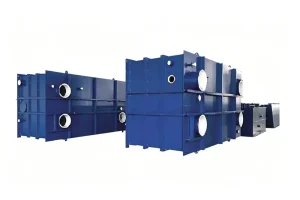
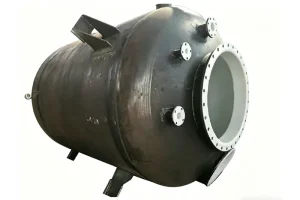
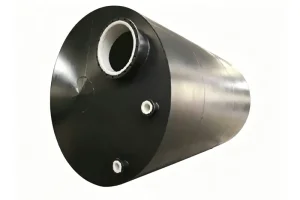
To overcome these harsh conditions, custom steel-lined equipment (engineered with virgin PTFE, PFA, PO, and PP) has transitioned from a specialized upgrade to the baseline operational standard across Mansoura and the broader Nile Delta. By fusing the structural mechanical strength and ASME pressure ratings of a carbon-steel exterior shell with the virtually universal chemical inertness of thick fluoropolymer linings, chemical operators in Mansoura achieve exceptional operational lifetimes exceeding 15 to 20 years, safeguarding capital investments and ensuring stringent adherence to Egyptian Environmental Affairs Agency (EEAA) regulatory guidelines.
Evolution of Lining Metallurgy & Fluoropolymer Sciences
Transitioning from legacy rubber and glass linings to next-generation paste-extruded PTFE, isostatic PFA, and rotational polymers.
Paste Extrusion & Isostatic Molding
Moving away from skived sheets with weak welded seams, modern PTFE fabrication utilizes cold-ram paste extrusion followed by tightly controlled sintering ovens. For complex geometries, multidirectional isostatic compression assures uniform wall thickness without thinning or mechanical stress voids.
Thermal Expansion Dissimilarity Management
Carbon steel and fluoropolymers exhibit radically divergent thermal expansion coefficients (PTFE expands nearly 10x faster than steel). Our advanced designs incorporate locked-in dovetail grooving, swaged interference fits, and perforated metallic anchoring ribs that eliminate liner wrinkling and vacuum pull-away during thermal shocks.
Full Vacuum Collapse Resistance
Equipping chemical columns and storage systems to withstand full negative pressure (-0.1 MPa) requires heavy-wall liners (3.5mm to 8mm+) paired with expanded mesh mechanical bonding. This prevents sudden column implosion under condensation vacuum in Mansoura batch synthesis reactors.
| Material Classification | Continuous Working Temperature | Tensile Strength (MPa) | Chemical Resistance Threshold | Primary Industrial Use-Case in Egypt |
|---|---|---|---|---|
| PTFE (Polytetrafluoroethylene) | -29°C to +200°C (-20°F to 392°F) | 20 - 35 MPa | Universal (pH 0-14), resists aqua regia, hot halogens | Mansoura fertilizer acid handling, bromine lines |
| PFA (Perfluoroalkoxy) | -29°C to +260°C (-20°F to 500°F) | 28 - 38 MPa | Universal; melt-processable with lower permeation | High-purity pharmaceutical synthesis, valves, manifolds |
| PO (Modified Polyolefin) | -20°C to +85°C (-4°F to 185°F) | 18 - 25 MPa | Excellent in non-oxidizing acids, caustics, salts | Large-capacity dilute acid storage, wastewater pipelines |
| PP (Polypropylene) | -10°C to +90°C (14°F to 194°F) | 25 - 35 MPa | High resistance to alkalis, pickling acids, neutral salts | Surface finishing, demineralized water circuits, bulk tanks |
Procurement Standards & Total Cost of Ownership (TCO)
Mitigating project interface risk through rigorous ASME Section VIII, ASTM F1545, and DIN compliance protocols.
Procuring process equipment for high-hazard industrial sectors requires navigating complex engineering standards. Global engineering, procurement, and construction (EPC) contractors working with plants across Dakahlia frequently face painful trade-offs between capital expenditure (CAPEX) and long-term operating costs (OPEX).
Deploying specialized exotic alloys like Hastelloy C-276, Titanium Grade 2, or Tantalum yields formidable upfront material expenses, long procurement lead times (often 32–48 weeks), and acute sensitivity to localized trace halide cracking. Conversely, unlined standard alloys succumb quickly to chemical attack.
Fluoropolymer-lined carbon steel delivers the optimal TCO balance:
- 60% to 75% Lower CAPEX compared to solid Hastelloy or nickel-alloy vessels.
- Zero Flange Pitting: Formed integral flare faces act as their own non-contaminating, resilient gasket surfaces.
- Extended Maintenance Intervals: Eliminates periodic protective repainting of interior walls or dangerous acid re-brick re-pointing.
- Sub-20 Week Delivery Cycles: Rapid fabrication and export coordination minimizes project milestone delays.
Mandatory QA/QC Verification Gateways
- Spark Testing (ASTM D5162 / ASTM F1545): 100% dielectric non-destructive testing at 20,000 to 25,000 Volts DC to guarantee complete absence of micro-pinholes or crystalline micro-voids.
- Hydrostatic Proof Testing: Vessel and spool shells hydro-tested to 1.5x design pressure per ASME Section VIII Division 1 guidelines before and after lining.
- Thermal Cycling Stress Tests: Repetitive thermal shocking between 20°C and 180°C to verify zero liner de-bonding, buckling, or thermal cracking.
- Permeation Monitoring Venting: Precision radial vent holes drilled through steel shells to escape microscopic vapor permeation without blister formation.
- Ultrasonic Wall Thickness Mapping: Continuous calibration of liner cross-sections across elbows, tees, and deep nozzle necks.
Macro Industry Solutions Across Mansoura's Manufacturing Poles
Custom-configured containment systems matching specific chemical processing topologies across the delta.
1. Nitrogenous & Phosphate Fertilizer Lines
In wet-process phosphoric acid concentration and urea granulation around Talkha, high chloride and fluoride impurities trigger extreme erosive corrosion. Our heavy-liner PTFE systems withstand abrasive slurry dynamics while completely resisting attacking hydrofluoric (HF) trace fractions.
2. High-Purity Pharmaceutical Synthesis
Gamasa's growing pharmaceutical intermediate sector demands complete freedom from heavy metal ion contamination. Virgin PFA-lined valves, reactors, and zero-dead-leg transfer tees guarantee full compliance with international pharmacopeia standards and FDA 21 CFR 177.1550.
3. ZLD Effluent & Saline Brine Concentration
Protecting the Nile Delta's delicate freshwater ecosystem requires industrial plants to enforce Zero Liquid Discharge (ZLD). Our PO- and PP-lined evaporation vessels and crystallization lines safely handle hypersaline slurries and acid regenerant waste without scaling or surface degradation.
Localized Support & Egyptian Statutory Compliance
Aligning high-precision Chinese manufacturing mastery with Egyptian engineering codes and field commissioning capabilities.
Operating industrial assets in Dakahlia requires strict compliance with Egyptian environmental and workplace safety frameworks. Our custom-engineered steel-lined equipment portfolio is designed to meet or exceed Egyptian Law No. 4/1994 for Environmental Protection, executive decrees issued by the Industrial Development Authority (IDA), and technical parameters regulated by the Egyptian Organization for Standardization and Quality (EOS).
Dedicated Engineering Support for Mansoura & Nile Delta Operators:
- Bespoke Spool Dimensioning: Precision CAD/CAM spool generation matching existing flanged civil constraints without requiring destructive civil adjustments.
- On-Site Flange Flaring Verification: We provide specialized technical tooling and field procedures for secondary field flares, allowing rapid modifications during plant turnarounds.
- Torque Sequence & Thermal Retorquing Protocols: Detailed documentation prevents cold-flow deformation and flange creep—a common cause of joint leakage in high-temperature chemical circuits.
- Export Packing & Port Fast-Tracking: Turnkey logistics from our manufacturing workshops directly through Alexandria or Damietta ports, with sea-worthy protective vacuum wrapping and rigid crating.
Technology Roadmap: Smart Lined Infrastructure
The next generation of corrosion containment features active predictive diagnostics and modified conductive polymer chemistry.
Conductive Antistatic Linings
For operations conveying non-conductive solvents, hydrocarbons, or fine powders in ATEX/Zone 0/1 explosive atmospheres, our proprietary black carbon-doped PTFE delivers surface resistivity < 10^6 Ohms, safely dissipating static buildup.
IoT-Enabled Permeation Sensing
Integrating micro-transducers within the exterior venting annular chamber allows automated, continuous detection of trace acid vapor breakthrough before corrosive attack can degrade the carbon steel pressure shell.
Modified Fluoro-Resin Density
By increasing molecular packing densities during high-temperature sintering, helium permeation rates are reduced by more than 40%, vastly improving equipment life in hot hydrochloric and wet chlorine gas streams.
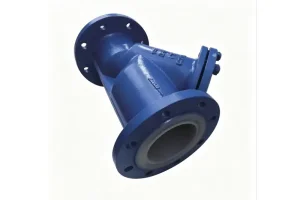
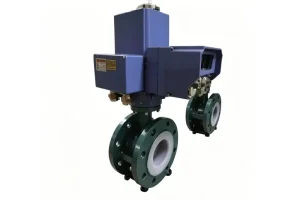
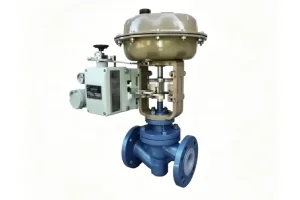
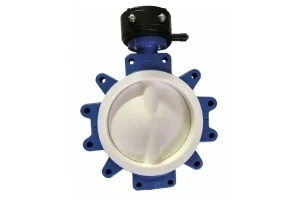
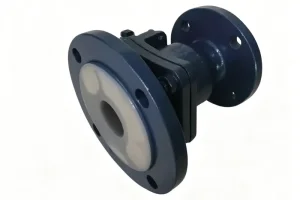
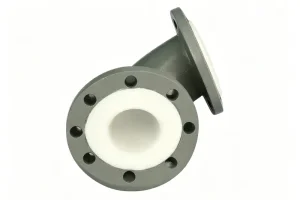
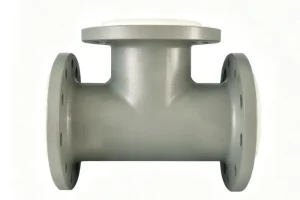
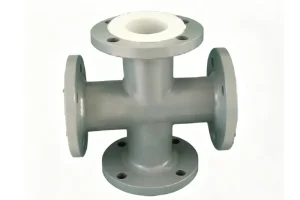
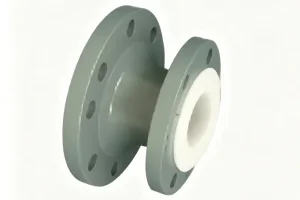
Precision PTFE-Lined Valves & Piping Components
Complete fluid-handling solutions: quarter-turn valves, regulating control valves, and precision-formed flanged spools.
Frequently Asked Engineering & Procurement Questions
Technical answers addressing real-world operational challenges in Mansoura chemical applications.
Consult with Industrial Corrosion Engineers for Your Mansoura Project
Send our senior engineering team your process data (chemical media, working temperatures, pressures, and isometric layouts). We will generate a complete technical proposal and budget breakdown within 24 to 48 hours.