
Sudan Primary Project Equipment Portfolio
High-efficiency, corrosion-resistant turnkey modules optimized for Sudanese climate conditions and industrial feedstocks.
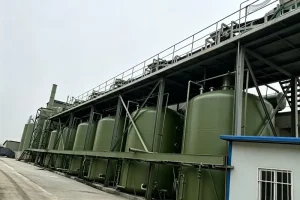
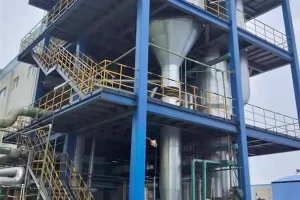
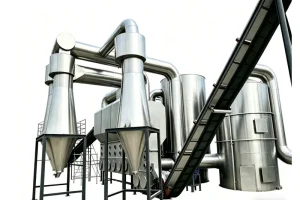
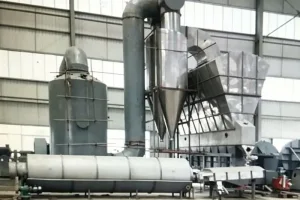
Calcium Chloride Chemical Engineering & Infrastructure in Sudan
Calcium Chloride ($\text{CaCl}_2$) serves as an indispensable ionic compound across oilfield exploration, civil construction, mining dust suppression, and industrial chemical manufacturing. In North-East Africa, specifically across the Republic of the Sudan and regional trade corridors, demand for specialized $\text{CaCl}_2$ production lines and anti-corrosive chemical process machinery has surged.
Developing robust chemical production lines in Sudan requires overcoming severe thermal operational parameters, aggressive atmospheric dust, specific raw material characteristics (such as limestone, industrial hydrochloric acid by-products, and natural brine resources from the Red Sea region), and stringent water management protocols. Standard, off-the-shelf machinery frequently fails under prolonged exposure to hot, arid African climates combined with highly acidic or concentrated chloride streams.
Engineering Authority & E-E-A-T Rationale
Our engineering framework adheres strictly to international EPC specifications (ISO 9001:2015, ASME Pressure Vessel Standards, and API Drilling Fluid Standards). By combining state-of-the-art Chinese chemical equipment fabrication with localized Sudanese process modeling, we deliver turn-key projects offering high thermodynamic efficiency, extended component life cycles, and minimal operational expenditure (OPEX).
Sudan Industrial Landscape & Local Calcium Chloride Demand Dynamics
1. Oil & Gas Drilling Operations
Sudan's hydrocarbon extraction in the Muglad and Melut basins relies heavily on non-damaging, high-density drilling fluids and completion brines. High-purity Liquid Calcium Chloride ($30\% - 40\%$ concentration) and Anhydrous $\text{CaCl}_2$ powders serve as key weighting agents and shale-inhibiting additive salts to maintain borehole stability under high pressure and temperature (HPHT).
2. Gold Mining & Road Dust Suppression
In Sudan’s expanding artisanal and industrial gold mining zones (e.g., Red Sea State, River Nile State, and Northern State), heavy hauling trucks generate massive particulate dust along unpaved desert roads. Flake Calcium Chloride ($74\% - 77\%$) acts as a superior hygroscopic dust suppressant, binding road aggregates and reducing road maintenance costs by up to 60%.
3. Construction & Rapid Concrete Curing
Ambient temperatures in Sudan frequently exceed 45°C, causing extreme challenges for structural concrete setting times. Calcium Chloride functions as a concrete accelerator, shortening setting times and enabling early structural strength gain for major civil engineering projects around Khartoum, Atbara, and Port Sudan.
Strategic Raw Material & Supply Chain Realities in Sudan
Historically, Sudanese industrial enterprises imported finished Calcium Chloride in bulk bags from overseas, encountering high logistics costs and severe currency exchange bottlenecks. However, local synthesis using limestone deposits and industrial hydrochloric acid ($\text{HCl}$) generated from chlor-alkali or regional chemical operations offers a transformative economic opportunity. Establishing localized custom project plants reduces regional procurement costs while building local industrial resilience.
Global Calcium Chloride Industry Trends & Procurement Demands
The global Calcium Chloride market is undergoing structural changes driven by energy costs, environmental compliance, and technology upgrades. Procurement officers and project engineers globally demand high-efficiency equipment capable of delivering multiple product specifications (liquid, dihydrate flake, anhydrous pellet) from a single adaptable footprint.
Transition to MVR Evaporators
Traditional multi-effect evaporators (MEE) consuming high volumes of steam are rapidly being replaced by Mechanical Vapor Recompression (MVR) technology. MVR systems recycle secondary steam, reducing overall energy consumption by up to 50%—an essential consideration for high-fuel-cost environments like Sudan.
Advanced Anti-Corrosion Metallurgy
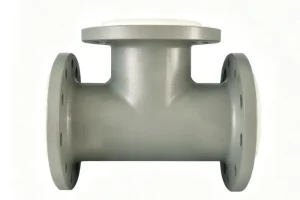
At high temperatures and concentrations above 35%, $\text{CaCl}_2$ solutions become extremely corrosive to standard carbon steel and 304/316 stainless steels. Global procurement specs now mandate Titanium (Grade 2/12), Hastelloy C-276, and Fluoropolymer (PTFE, PP, PO) lined vessels and piping systems to ensure a 15+ year operational life.
Why Partner with Chinese Manufacturers for Sudan EPC Projects?
Chinese chemical equipment manufacturing combines complete industrial supply chain integration with world-class anti-corrosion fabrication and cost-competitive engineering.
1. Shandong Salt-Chemical Cluster Integration
Our production facilities in Weifang, Shandong sit at the heart of China’s largest salt-chemical industrial hub. Decades of operational refining experience have allowed us to perfect equipment designs based on millions of operating hours in harsh chemical environments.
2. Modular Skid-Mounted Engineering
To eliminate on-site installation risks in remote Sudanese regions, equipment is designed as modular, skid-mounted units. Modules undergo structural alignment, hydrostatic testing, and electrical pre-commissioning in China prior to containerized shipping.
3. Superior Capex to Value Ratio
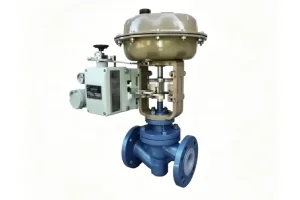
Chinese manufacturing offers an outstanding capital efficiency advantage—delivering premium titanium heat exchangers, PTFE-lined valves, and automated PLC control systems at 30% to 50% lower CAPEX compared to European or American machinery makers.
Calcium Chloride Production Technical Architecture
A full-scale Calcium Chloride processing facility typically comprises three main process units engineered for high yield and environmental compliance:
Neutralization & Purification
Limestone ($\text{CaCO}_3$) reacts with Hydrochloric Acid ($\text{HCl}$) in specialized graphite or rubber-lined reaction columns:
CaCO3 + 2HCl → CaCl2 + H2O + CO2↑
Subsequent chemical dosing removes heavy metals, iron ($\text{Fe}^{3+}$), and sulfate impurities ($\text{SO}_4^{2-}$), followed by deep filtration to produce high-clarity crude liquid $\text{CaCl}_2$.
Evaporation & Concentration
The dilute $\text{CaCl}_2$ solution ($\sim 30\% - 35\%$) passes into Multi-Effect or MVR Evaporators constructed from Titanium Grade 2 heat exchange tubes. Water is vaporized until liquid concentration reaches $48\% - 52\%$ for liquid sales, or $68\% - 70\%$ for thermal feed to flaking units.
Granulation, Flaking & Drying
Concentrated liquor flows to a rotary flaker to yield Dihydrate Flakes ($74\% - 77\%$). To produce Anhydrous Pellets/Prills ($94\% - 97\%$), the material enters a high-temperature Fluidized Bed Dryer powered by efficient hot-air furnaces, followed by automated screening and bagging.
Localized Application Scenarios Across Sudan Regions
Scenario A: Red Sea Coast Salt Processing & Purification
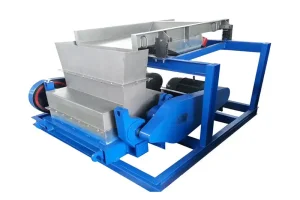
Near Port Sudan, vast solar salt evaporation pans yield sea salt and concentrated bittern fluids. Our water washing salt equipment, double-roll crushers, and purification lines allow operators to process raw sea salt into high-purity industrial grade $\text{NaCl}$ while recovering valuable magnesium and calcium chloride by-products from residual bitterns.
- High salt washing ratio reducing insoluble impurities
- Titanium and PTFE lined valves resisting marine corrosion
- Integrated automated bagging lines for export readiness
Scenario B: Oilfield Drilling Mud & Completion Fluids
In the oil-producing basins of Southern and Western Sudan, drilling contractors demand rapid delivery of high-purity Liquid Calcium Chloride ($35\% - 38\%$) to formulate invert-emulsion mud systems. Skid-mounted liquid $\text{CaCl}_2$ plants located in industrial zones allow quick dispatch to field rigs, eliminating costly dry powder mixing operations on site.
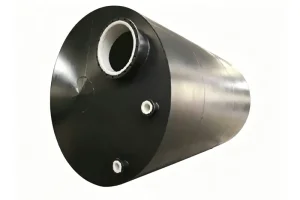
- PP and PTFE lined storage tanks preventing iron contamination
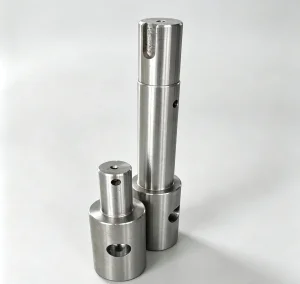
- High-volume screw conveyors and auger drive shafts for raw material handling
- Automated density monitoring for exact fluid specifications
Frequently Asked Questions: Sudan Projects & Technical Procurement
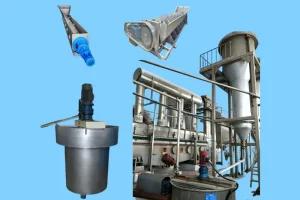
Sudan Auxiliary & Anti-Corrosion Equipment Products
High-performance salt crushing, conveying, fluid handling, and anti-corrosion components customized for Sudanese project deployments.
Ready to Plan Your Calcium Chloride Project in Sudan?
Consult with our senior chemical engineering team today for custom technical proposals, equipment sizing calculations, raw material analysis support, and ROI projections tailored to Sudanese operating environments.
Send Inquiry Now