

Process Integration Portfolio
Continuous Drying & Fluidized Handling Solutions
Integrated processing modules manufactured under ISO 9001:2015 specifications to support large-scale salt extraction, chemical drying lines, and abrasive material handling.

Custom PTFE-Lined Y-Strainer Factories, Factory
Explore Specifications →
China Professional Salt Drying Machinery Products, Service
Explore Specifications →
China PTFE-Lined Globe Valve Product, Service
Explore Specifications →
China PO/PE Lined Tank Products, Service
Explore Specifications →
Custom Flexible Screw Conveyor Connecting Drive Shaft (Auger Shaft Head) Factory, Service
Explore Specifications →
Custom Salt Washing Line Product, Products
Explore Specifications →
China PTFE Lined Elbow Product, Products
Explore Specifications →
Thermodynamic Engineering White Paper
Fluid Bed Dryer Machine: Hydrodynamic Principles & Heat Exchange Kinetics
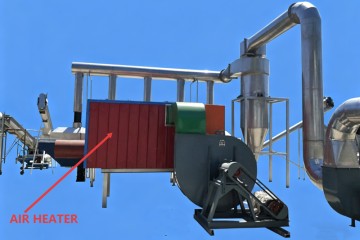
In chemical processing and mineral crystallization lines, convective mass transfer is the critical rate-limiting step. The China Fluid Bed Dryer Machine utilizes an engineered perforated air distributor plate paired with calibrated harmonic excitation motors (Vibrating Fluidized Bed Dryer - VFBD) or static high-velocity laminar air jets.
By forcing conditioned hot air through an evenly distributed bed of damp solids at velocities exceeding the minimum fluidization velocity (Umf), solid particles become suspended in a buoyant, fluid-like state. This complete particle-to-gas contact eliminates thermal dead zones and maximizes heat exchange kinetics, drastically compressing drying curves while preventing thermal degradation of heat-sensitive compounds.
- Uniform Moisture Removal: Down to <0.05% residual moisture content without hot-spot agglomeration.
- Anti-Attrition Bed Hydrodynamics: Gentle pneumatic cushion prevents particle degradation in fragile crystal lattices.
- Variable Residence Time Regulation: Multi-zone weir baffles offer granular control over heat soak and cooling stages.
35-45%
Thermal Energy Savings Over Rotary Trommels
99.8%
Solids Recovery with Multi-Stage Cyclones
±1.5°C
PID-Governed Multi-Zone Temperature Precision
28,000 m²
Manufacturing & Validation Facility Scale
Sourcing & Industrial Scalability
China Factory Supply Chain Advantages & EPC Value Engineering
Why Tier-1 international chemical consortia and mining corporations partner with Weifang Ruitu Automation Equipment Co., Ltd. for turnkey fluidization systems.
Vertical Coastal Industrial Clustering
Situated in the Binhai Economic and Technological Development Zone of Weifang, Shandong, our facility integrates directly with regional titanium metallurgy mills, specialized Hastelloy foundries, and precision fluoroplastic lining providers, reducing procurement lead times by over 40%.
Full-Spectrum Anti-Corrosion Integration
Unlike standard machinery fabricators, Ruitu engineers the complete fluid bed dryer system alongside proprietary PTFE/PO/PE lining lines, heavy-duty duplex stainless steel (2205/2507), and titanium-clad drying plates to withstand saturated halogen brines.
Single-Point EPC Contract Accountability
From initial brine sampling and pilot bed simulation to workshop pre-assembly, on-site commissioning, DCS automation integration, and final buy-back/decommissioning, we eradicate subcontractor margin stacking and project interface finger-pointing.
Global EPC Assurance
Localization Support, Quality Protocols & Regulatory Compliance
Overcoming cross-border execution obstacles with comprehensive code conformity, localized technical deployment, and documented material certifications.
Pressure & Electrical Directives
Compliant with ASME Section VIII, EU PED (2014/68/EU), CE Machinery Directives, and ATEX/IECEx explosion-proof certifications for combustible particulate and chemical vapors.
Sanitary cGMP & FDA Baseline
For refined edible salt, pharmaceutical salts, and food additives: mirror-polished 316L contact surfaces (Ra < 0.4 μm), automated Clean-in-Place (CIP) spray heads, and zero-residue discharge seals.
On-Site Engineering Teams
Multilingual commissioning engineers stationed across key markets for civil layout review, mechanical levelling, cold/hot commissioning, and continuous operator training until steady state.
Remote IoT Diagnostics
Integrated cloud PLC nodes support remote predictive maintenance, enabling engineers in Weifang to diagnose differential pressure fluctuations or harmonic imbalances in real time worldwide.
Engineered Execution Across Industries
Application Scenarios & Operational Process Demands
Continuous fluidized bed systems customized to overcome specific crystalline rheology, corrosiveness, and energy constraints.
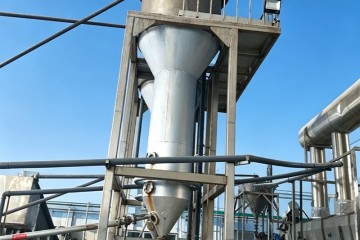
Edible Vacuum Salt & Industrial High-Purity NaCl Lines
Raw crude sea salt, rock salt, and lake salt slurries emerge from centrifuges carrying 3% to 5% surface moisture. In high-output edible salt manufacturing (10 to 60 metric tons/hour), rotary drum dryers often smash salt crystal cubes into unwanted fine dust while consuming excessive thermal energy.
Ruitu’s continuous Vibrating Fluid Bed Dryer ensures gentle transport on an oscillating fluidization deck. Multi-stage hot air heating is paired with integrated indirect contact cooling coils in the final discharge zone, stabilizing salt temperature to <45°C directly suitable for automated weighing and anti-caking bagging.
Feed Moisture: 3.5% → Discharge: ≤ 0.1%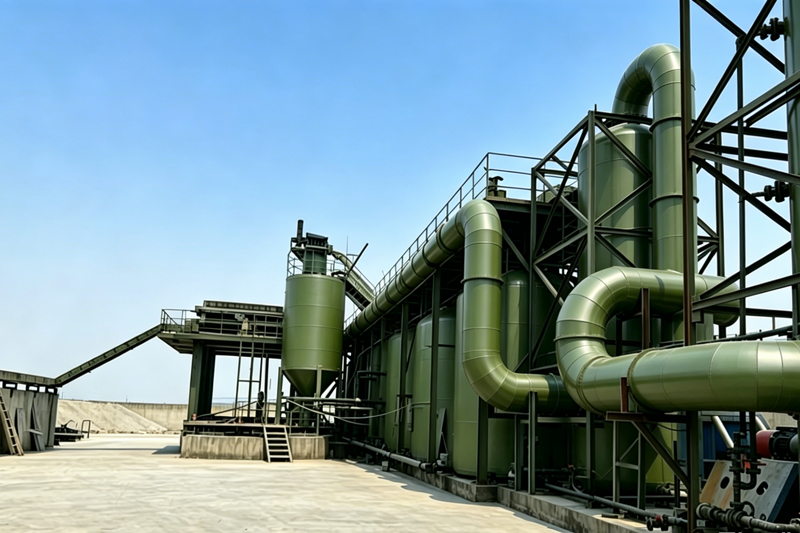
Hygroscopic Calcium Chloride & Magnesium Chloride Dehydration
Processing high-salinity brines and hazardous waste streams into stable, saleable flakes or granules requires navigating extreme hygroscopicity. Calcium chloride (CaCl2) and magnesium chloride (MgCl2·6H2O) melt into destructive sticky pastes if bed temperatures deviate slightly from optimal vapor-pressure windows.
Our specialized fluidization setups employ precisely governed multi-zone heating curtains, external hot-air recycling economizers, and heavy-gauge Titanium Gr.2 or PTFE-shielded plenum chambers that mitigate acid corrosion while preventing bed defluidization.
Anti-Corrosion Plenums: Titanium / PTFE Lined
Future-Ready Technology
Industry Trends: The Shift to Closed-Loop, Zero-Carbon Drying
How the next generation of China-manufactured fluid bed dryers optimizes thermal balance, reduces exhaust emissions, and incorporates AI-guided automation.
| Evaluation Parameter | Legacy Rotary Drum Dryer | Standard Static Fluid Bed | Ruitu Next-Gen Vibrating Fluid Bed (VFBD) |
|---|---|---|---|
| Thermal Efficiency | 50% - 62% (High surface shell losses) | 65% - 75% | 82% - 91% (Closed-loop air recycling) |
| Crystal Degradation / Fines | High (>12% attrition from cascading) | Moderate (3% - 6%) | Ultra-Low (<0.8% preserved morphology) |
| Corrosion Handling | Costly relining; high weld failure | Moderate stainless steel compatibility | Engineered PTFE/Titanium Composite Chambers |
| Exhaust Dust Loading | Heavy; requires oversized wet scrubbers | Medium; requires baghouse maintenance | Integrated Pulse-Jet Cyclones + Low-Velocity Plenum |
| Footprint & Civil Cost | Extensive axial length; heavy foundations | Compact vertical profile | Modular Skids; 45% smaller civil footprint |
Technical Clarifications
Frequently Asked Questions: Engineering, Sourcing & Operations
Actionable answers to technical and operational concerns raised by procurement executives, mechanical consultants, and EPC site managers.
How does a Vibrating Fluid Bed Dryer outperform traditional flash or rotary dryers in salt processing?
Rotary dryers rely on internal lifting flights that drop wet salt crystals through hot gas streams, generating substantial mechanical shear that fractures cubic crystals into unmarketable fines. Furthermore, salt caking on the drum interior increases maintenance downtime. In contrast, Ruitu's Vibrating Fluid Bed Dryer introduces gentle mechanical vibrations combined with balanced airflow. The salt crystals float across the distributor plate in a continuous fluidized state, ensuring uniform moisture evacuation with less than 0.8% crystal attrition and dramatically lower specific thermal consumption.
Which anti-corrosion materials are specified for saturated halide brine drying systems?
Standard stainless steels like 304 or 316L rapidly pit and stress-crack under hot chloride and bromide conditions. Depending on chloride concentration, operating temperature, and pH, Ruitu engineers fluid beds using 2205/2507 duplex stainless steels, high-nickel alloys (Hastelloy C-276), or Grade 2 Titanium for perforated distributor decks. Non-heated ductwork, vapor scrubbers, and auxiliary storage tanks are lined with carbon-steel-bonded PTFE, ETFE, or rotationally molded PO/PE linings to eliminate corrosion at viable capital expenditure costs.
What utilities, space requirements, and engineering inputs are needed to begin project sizing?
To provide an accurate technical and commercial proposal, our engineering team requires: (1) Feedstock chemical assay including initial moisture percentage, particle size distribution (d50), and crystal shape; (2) Desired hourly dry throughput; (3) Residual moisture threshold; (4) Available heat medium (saturated steam pressure, thermal oil, natural gas direct/indirect furnace, or flue gas waste heat); (5) Environmental emission targets for cyclone particulate recovery; and (6) Factory floor dimensions and crane load ratings.
How does Ruitu manage overseas installation, DCS integration, and operator training?
We provide full turnkey deployment. Prior to dispatch, units undergo workshop pre-assembly and full mechanical dry-run testing. A dedicated engineering delegation—including mechanical supervisors, instrumentation specialists, and chemical process engineers—deploys to your site. They supervise mechanical placement, interface the system with your central DCS (Siemens, Schneider, or Honeywell platforms via Profinet or Modbus), oversee cold and hot commissioning, and train your local operating teams on cleaning schedules, bed vibration tuning, and automated shutdown sequences.
Can the fluid bed system run in a closed-loop configuration for solvent recovery or inert gas drying?
Yes. When materials contain flammable organic solvents or are vulnerable to atmospheric oxidation, Ruitu engineers airtight closed-loop fluid bed drying systems using high-purity Nitrogen (N2) as the fluidizing carrier. The system integrates condensation recovery units, HEPA/carbon gas scrubbers, oxygen monitoring sensors with automatic emergency venting, and variable frequency recirculating blowers, ensuring explosive limits remain securely below 25% of the lower explosive limit (LEL).
Corrosion-Resistant Auxiliary Equipment
Integrated Flow Control, Crushing & Fluid Handling Machinery
Auxiliary components engineered to integrate directly into fluid bed drying lines and aggressive salt-chemical environments.

Custom Hammer Crusher Products, Service
Explore Specifications →
Custom PTFE-Lined Butterfly Valve Factory, Service
Explore Specifications →
Custom Mobile Belt Conveyor Products, Service
Explore Specifications →
China PTFE-Lined Flexible Hose Factories, Service
Explore Specifications →
Custom PTFE-Lined Pneumatic Butterfly Valve Factory, Products
Explore Specifications →
China Water Washing Salt Equipment, Salt Purification Machine, Refined Salt Production Line, Industrial Salt Washing Plant, Edible Salt Processing Equipment Factories, Products
Explore Specifications →
China PTFE Lined Pipe Products, Service
Explore Specifications →