
Heavy Industrial Processing & Conveying Machinery
Engineered for extreme corrosion resistance, high tensile throughput, and continuous operation in demanding chemical and salt refining environments.
1. Development Trends of Machine Conveyor Belts in Global Industrial Infrastructure
In modern industrial operations, material handling is no longer considered a simple auxiliary logistical step; it forms the backbone of continuous-process manufacturing. The global market for high-performance conveyor belts has undergone a paradigm shift driven by stringent operational uptime targets, environmental sustainability mandates, and the aggressive expansion of bulk chemical, salt processing, and mining industries. Within China’s industrial ecosystem—specifically regions like Shandong, renowned for salt-chemical manufacturing—conveyor belt production has evolved from generic rubber compounding to highly engineered, application-tailored polymer matrix composite systems.
Historically, conveyor systems suffered from premature wear, chemical degradation, carcass delamination, and splice failure when deployed in highly corrosive or abrasive environments. Today, modern industrial facilities demand continuous material flow without unscheduled downtime. This operational directive has pushed conveyor belt factories to integrate sophisticated material science directly into their manufacturing lines.
Advanced Elastomer Compounding
Modern conveyor belts leverage synthetic rubber matrix blends (EPDM, NBR, Chloroprene, and specialty Fluoropolymers) engineered to withstand chemical leaching, high salinity, oxidation, and oil-induced swelling.
High Tensile Carcass Architecture
Transition from traditional cotton canvas to multi-ply EP (Polyester-Polyamide) fabrics, NN (Nylon) weaves, and high-tensile Steel Cord reinforcements capable of absorbing heavy impact energy over long distance spans.
Smart IoT & Edge Sensing Integration
Embedded conductive rip-detection loops, fiber-optic temperature sensors, and real-time belt thickness monitoring nodes enable predictive maintenance algorithms and zero-downtime manufacturing goals.
Furthermore, the global transition toward decarbonization has accelerated the demand for Low Rolling Resistance (LRR) conveyor belts. By optimizing the viscoelastic properties of the bottom cover rubber, LRR belts reduce indentation rolling resistance as the belt travels over idlers. In long-distance overland conveying systems, this engineering modification yields electrical energy savings between 12% and 25%, directly lowering the facility’s carbon footprint and Total Cost of Ownership (TCO).
2. Global Enterprise Procurement Requirements & Technical Evaluation Benchmarks
Procurement directors and plant engineering teams evaluating Chinese conveyor belt manufacturers must navigate complex technical trade-offs. Selecting a conveyor belt solely based on initial purchase cost frequently leads to catastrophic line stoppages, product contamination, and increased maintenance overhead. Global enterprise procurement standards require multi-dimensional qualification criteria across mechanical, chemical, and operational vectors.
Core Procurement Rule: In abrasive bulk handling or chemically active processing (such as salt washing, bromine recovery, and fertilizer production), belt life expectancy is governed by carcass adhesion strength and cover wear rate under localized shear stress—not merely tensile rating.
Technical Standard Compliance Comparison
International procurement frameworks benchmark belt performance against standardized international testing protocols. Superior Chinese manufacturers operate full-scale laboratory testing units capable of validating every production batch against DIN, ISO, ASTM, and BS standards.
| Test Parameter | Standard Protocol | Standard Grade Benchmark | Heavy-Duty Chemical Grade (Ruitu Standard) |
|---|---|---|---|
| Cover Abrasion Loss | ISO 4649 / DIN 53516 | 120 mm³ to 150 mm³ | ≤ 70 mm³ to 90 mm³ (Extended wear life) |
| Tensile Strength (Cover Rubber) | ISO 37 / DIN 53504 | 15 MPa to 20 MPa | ≥ 24 MPa (High structural integrity) |
| Elongation at Break | ISO 37 | ≥ 350% to 400% | ≥ 450% (High energy absorption) |
| Ply-to-Ply Adhesion Strength | ISO 252 | 4.5 N/mm to 6.0 N/mm | ≥ 10.0 N/mm (Anti-delamination under moisture) |
| Chemical & Oil Swell (70h @ 23°C) | ISO 1817 (In IRM 903 Oil/Brine) | +25% to +40% Volume Change | ≤ +5% Volume Change (NBR/EPT Matrix) |
Key Procurement Intent Vectors
- Chemical Resistance: Conveyor belts conveying wet crude salt, dihydrate calcium chloride, or acidic slurry must prevent chemical migration into the carcass plies to eliminate internal rotting and bond degradation.
- Food-Grade Compliance (FDA/EU 10/2011): For edible salt purification lines, the belt cover rubber must be non-toxic, odorless, white/light-colored, and free of phthalates or heavy metal plasticizers.
- Flame Retardancy & Static Dissipation: In enclosed gallery structures, dust-rich grain silos, or underground mines, belts must meet ISO 340 (flame resistance) and ISO 284 (electrical conductivity ≤ 3 × 10⁸ Ω) to eliminate explosion risks.
3. Macro Industry Solutions & Turnkey System Integration
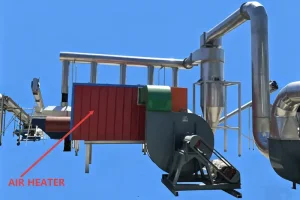
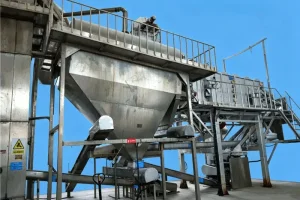
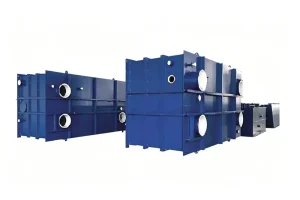
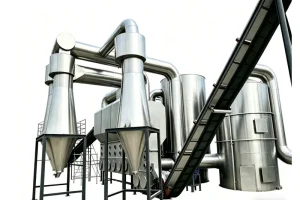
A conveyor belt cannot function in isolation. It is a critical component within a larger, interconnected bulk material processing line. Weifang Ruitu Automation Equipment Co., Ltd. bridges the traditional gap between standalone conveyor belt manufacturing and full-scale EPC system engineering. Our integrated macro-solutions combine heavy-duty conveyor systems with steel-lined chemical reactors, fluid-bed salt dryers, roller crushers, and multi-deck screening units.
Salt Washing & Refining Plants
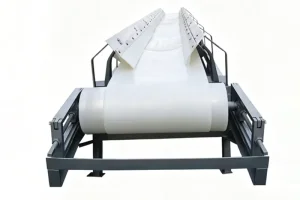
Our custom heavy-duty, food-grade, anti-corrosion conveyor belts serve as the continuous transport system between primary crude salt crushers, double-roll washers, fluid-bed dryers, and automated packaging lines. Engineered with sealed edge protection to prevent brine crystallizing inside fabric plies.
Bromine & Calcium/Magnesium Chloride Lines
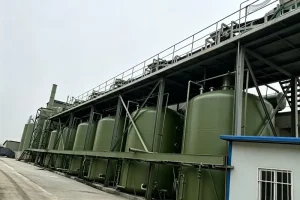
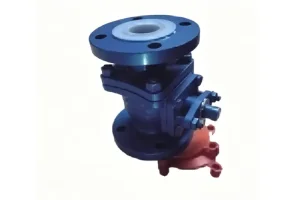
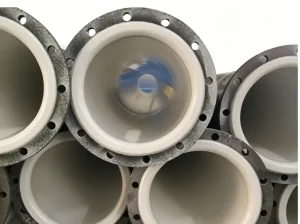
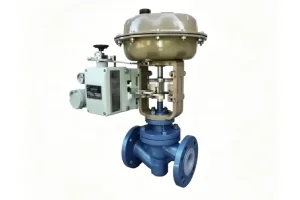
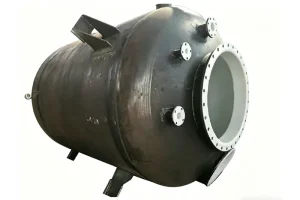
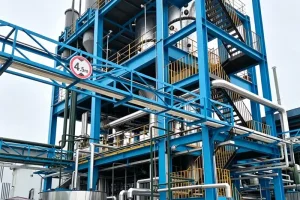
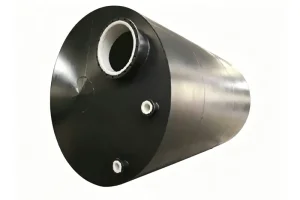
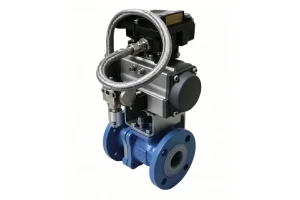
In harsh bromine extraction and chloride evaporative processing, ambient air and conveyed cake material are saturated with acidic fumes. We integrate corrosion-proof PTFE/PO/PE lined vessels, PTFE valves, and chemically inert conveyor belts into an optimized process loop.
By offering an end-to-end engineering umbrella—spanning initial brine analysis, civil foundation layout, custom equipment fabrication, conveyor system installation, and operational commissioning—Ruitu eliminates system mismatches. Our systems ensure that drive motor horsepower, gearbox reduction ratios, pulley diameters, and belt tensile strengths are calculated to exact system hydraulic and mechanical loads.
4. Global Localization Support, Compliance & Quality Assurance
Navigating cross-border procurement of industrial machinery requires rigorous compliance management, transparent quality assurance frameworks, and robust post-delivery support. Ruitu’s international engineering division delivers comprehensive localization services tailored to global EPC contracts.
Custom OEM/ODM Engineering
Tailored belt widths (300mm to 2400mm), cleat profiles (Chevron, Sidewall, Bucket), cover gauges (Top 1.5mm–12mm / Bottom 1.5mm–8mm), and specific fabric ply layups engineered to exact customer drawing specifications.
On-Site Hot Vulcanization
Our field dispatch teams provide international on-site belt splicing, hot vulcanization jointing, cold bonding services, and mechanical fastener installations to ensure maximum joint strength efficiency (up to 95% of base belt rating).
Export Packaging & Logistics
Heavy steel spool wrapping, moisture-proof vacuum barrier bags, and wooden crating designed for multi-modal sea freight, protecting belts against UV degradation, humidity, and mechanical damage during transit.
Quality Control & Traceability Protocol
Every meter of conveyor belt produced in our facility undergoes rigorous Quality Assurance (QA) inspection. Raw rubber masterbatches undergo rheometer cure testing, while finished belt rolls undergo non-destructive ultrasonic thickness gauge checks, dynamic cover adhesion testing, and full visual inspection under automated optical scanning systems. Serialized test certificates (EN 10204 3.1) are dispatched with every shipment.
5. Technology Roadmap & Future Outlook (2025–2035)
The next decade of industrial conveyor belt manufacturing will be defined by the convergence of material science, artificial intelligence, and eco-friendly manufacturing technologies. As heavy industries strive for net-zero operations and unmanned factory automation, Ruitu is actively advancing several next-generation research programs:
- Self-Healing Elastomer Compounds: Integration of micro-encapsulated liquid polymer curing agents into cover rubber matrixes. When sharp rocks or metal tramp cause micro-scratches, the capsules rupture, initiating room-temperature vulcanization to fill tears automatically before cover degradation propagates.
- AI-Powered Optical & Thermal Condition Monitoring: Multi-spectral camera arrays combined with infrared thermal imaging mounted at transfer points. Computer vision models inspect cover wear patterns, detect edge fraying, and identify stuck idler rollers by thermal signature before heat can damage the belt carcass.
- Bio-Based & Recycled Polymer Matrixes: Developing sustainable synthetic rubber alternatives utilizing devulcanized reclaimed rubber and plant-derived silica fillers, achieving up to 40% reduction in embodied carbon without compromising DIN wear resistance standards.
- Ultra-High Temperature Resistant Carcasses: EPDM and Silicone-matrix belts engineered to handle hot salt cakes and calcined mineral outputs at continuous operating temperatures exceeding 220°C (with peak spike tolerance up to 400°C).
Frequently Asked Questions (FAQ)
Technical clarity on conveyor belt selection, maintenance, system integration, and international procurement.
How do I select between EP (Polyester) and NN (Nylon) fabric conveyor belts?
EP (Polyester-Polyamide) belts utilize polyester in the warp direction and nylon in the weft direction. They offer low elongation under tension (typically ≤ 1.5% at rated load), high dimensional stability, excellent heat resistance, and superior resistance to water degradation. EP belts are ideal for medium to long-distance conveying systems where take-up stroke is limited.
NN (Nylon-Nylon) belts feature nylon in both warp and weft. They offer exceptional impact resistance, high flex fatigue life, superior troughability, and excellent resistance to mechanical tearing. NN belts are preferred for short-to-medium distance applications with heavy, large-lump drop impact points, though they require longer take-up travel due to higher elasticity.
What belt cover formulation is recommended for wet crude salt and chemical brine transport?
For wet salt and brine handling, standard natural rubber (NR) covers suffer from moisture ingress and salt crystal growth within microscopic pores, leading to cover swelling and carcass delamination. We recommend a specialized SBR/EPDM or NBR compound matrix formulated with anti-hydrolysis additives, high tear resistance, and sealed edge encapsulation. If the salt is food-grade, a white FDA-compliant Nitrile rubber cover must be specified.
What causes conveyor belt edge curling and how can Ruitu equipment resolve it?
Edge curling (or cupping) typically results from uneven transverse tension, thermal gradients between top and bottom covers, chemical swell limited to the cover rubber, or incorrect troughing idler transition distances. Ruitu’s engineering team resolves edge curling by calculating optimized transition distances, selecting dimensionally balanced EP fabric layups, and recommending self-aligning training idlers across the conveyor structure.
What is the difference between Hot Vulcanization and Cold Bonding for belt splicing?
Hot Vulcanization uses a heating press, specialized pressure bags, unvulcanized cover stock, and tie-gum under controlled heat (145°C) and pressure. It restores joint strength up to 90%–95% of the original belt rating, provides a smooth seam, and is completely waterproof. Recommended for high-tension, long-distance, or wet chemical belts.
Cold Bonding relies on chemical cement and pre-vulcanized repair strips at ambient temperature. It allows quicker repair turnaround times and lower equipment costs, but provides lower joint efficiency (approx. 70%–80%) and has limited resistance to extreme thermal or chemical environments.
Does Ruitu provide complete turnkey EPC line engineering beyond conveyor belts?
Yes. Weifang Ruitu Automation Equipment Co., Ltd. provides comprehensive turnkey EPC services for bromine extraction plants, salt washing lines, calcium chloride production facilities, and magnesium chloride crystallization units. Our services encompass raw material brine laboratory analysis, civil structure design, equipment manufacturing (including steel-lined vessels, PTFE valves, vibrating screens, dryers, and conveyor systems), site installation, operator training, and final commissioning.
How can plant managers calculate the required safety factor for conveyor belt tension?
The safety factor ($SF$) is calculated as the ratio of Nominal Tensile Strength ($T_B$ in N/mm) to Maximum Operating Tension ($T_{max}$ in N/mm): $SF = T_B / T_{max}$. For fabric-reinforced belts (EP/NN), standard engineering guidelines specify a safety factor of 8 to 10 under steady-state operating conditions, and no less than 6.5 during peak acceleration/deceleration to prevent dynamic mechanical fatigue.
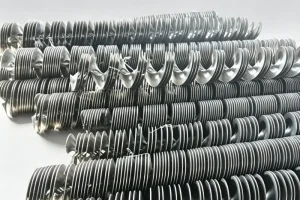
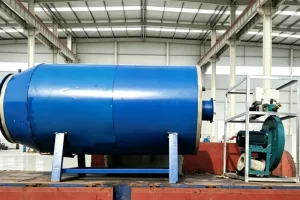
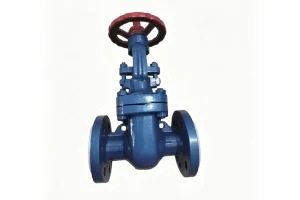
Corrosion-Resistant Vessels & Ancillary Machinery
Heavy chemical extraction tanks, PTFE-lined control valves, specialized auger blades, and thermal hot air furnaces.
Empower Your Material Handling & Salt-Chemical EPC Projects
Connect directly with Ruitu’s senior engineering team for raw material analysis, conveyor belt selection calculations, and complete plant equipment proposals.