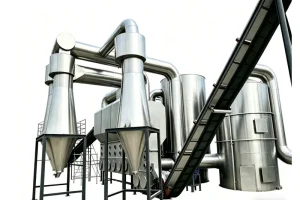
Featured Machinery & Fluid Transfer Lineup
Precision-fabricated industrial components engineered to integrate directly into continuous chemical process trains, vacuum drying modules, and salt extraction circuits.
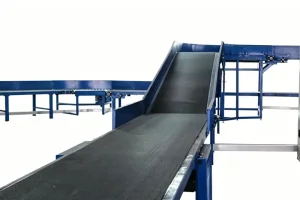
China Industrial Belt Conveyor Factories, Service
Explore Specifications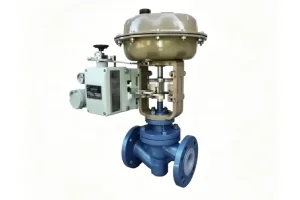
Custom PTFE-Lined Control Valve Product, Service
Explore Specifications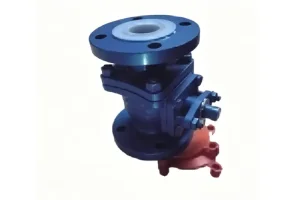
Custom PTFE-Lined Ball Valve Factory, Product
Explore Specifications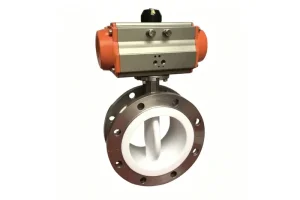
Custom PTFE-Lined Pneumatic Butterfly Valve Factory, Products
Explore Specifications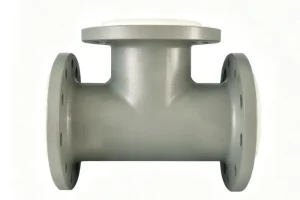
Custom PTFE Lined Tee Factory, Service
Explore Specifications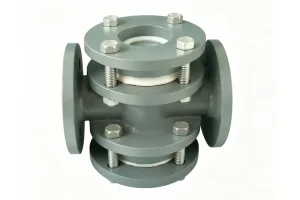
Custom PTFE Lined Sight Glass Pot Factories, Product
Explore Specifications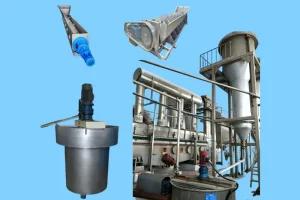
China Water Washing Salt Equipment, Salt Purification Machine, Refined Salt Production Line, Industrial Salt Washing Plant, Edible Salt Processing Equipment Factories, Products
Explore Specifications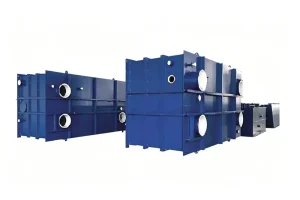
China PTFE-Lined Large-Scale Extraction Tank Factories, Product
Explore SpecificationsGlobal Industrial Status of Microwave Vacuum Dehydration
Bridging the critical efficiency divide between slow lyophilization and thermally degrading convective air ovens via controlled sub-atmospheric dielectric heating.
Thermodynamic Revolution
Conventional conduction and convective drying rely on external heat transferring inward through insulating dry crusts, causing uneven heat stress. Industrial Microwave Vacuum Ovens (MVO) reverse this heat gradient.
By exciting polar water molecules directly inside the material under absolute pressures between 1.5 kPa and 10 kPa, moisture rapidly vaporizes at 25°C to 45°C, eliminating case-hardening while slashing cycle times by up to 80% compared with hot-air drying.
Preservation of Molecular Integrity
For bioactive botanical extracts, heat-sensitive antibiotics, enzymatic catalysts, and delicate chemical chelates, high temperature triggers irreversible degradation.
In an anaerobic vacuum cavity, oxidative decomposition is completely suppressed. Microwave radiation couples specifically with unbound and bound moisture, preserving active phytochemicals, crystal polymorph lattices, and sensory volatiles without the exorbitant operational cost of freeze drying (lyophilization).
Decarbonization & Energy Intensity
Global chemical manufacturing facilities face stringent net-zero mandates. Traditional steam-jacketed dryers suffer from parasitic thermal losses exceeding 50% through vessel walls and extensive condenser pipes.
Vacuum microwave chambers transfer electromagnetic energy directly into volumetric molecular kinetic movement with an electro-thermal conversion efficiency exceeding 75%, allowing green-electrified production lines to eliminate coal or gas-fired steam boilers entirely.
Engineering Architecture & Plasma Arc Mitigation
An authoritative breakdown of industrial microwave vacuum oven physics, resonant waveguide distribution, and continuous process control.
1. The Paschen Curve Challenge: Preventing Glow Discharge in Vacuum Environments
One of the most complex mechanical-physics challenges in building an industrial Microwave Vacuum Oven is preventing plasma discharge (glow discharge arcing). According to Paschen's Law, the breakdown voltage of a gas drops precipitously as chamber pressure is reduced from atmospheric pressure (101.3 kPa) into the intermediate vacuum realm (0.1 kPa to 1 kPa). Under intense high-frequency electromagnetic fields (2450 MHz or 915 MHz), free electrons accelerate and collide with residual gas ions, causing localized electric field collapse and severe material scorching.
Our engineering methodology resolves this via three redundant mechanisms: (a) Pressurized waveguide choke ports that keep microwave transmitters at atmospheric boundary conditions until the beam exits via vacuum-sealed quartz or PTFE dielectric windows; (b) Multi-point phased microwave power splitting, avoiding electric field hot-spots; and (c) Solid-state optical arcing sensors linked to sub-millisecond IGBT trip circuits that choke magnetron drive power the microsecond an ionized spark is detected.
| Drying Technology | Thermal Mechanism | Atmospheric Core Temp | Energy Consumption | Industrial Throughput Limit |
|---|---|---|---|---|
| Vacuum Microwave (Ruitu MVO) | Direct dielectric internal dipolar oscillation + vacuum sublimation/flash | 28°C – 50°C | 0.7 – 1.1 kWh/kg H&sub2;O (Ultra Low) | Continuous belt or multi-shelf batch up to 2000 kg/h |
| Convective Hot Air Oven | External surface conductive/convective thermal transfer inward | 80°C – 140°C | 2.2 – 3.8 kWh/kg H&sub2;O (High losses) | Batch tray loading, prone to thermal encrustation |
| Industrial Lyophilizer (Freeze Dryer) | Sublimation from deep-frozen solid state under high vacuum (< 20 Pa) | -20°C – 15°C | 4.5 – 8.0 kWh/kg H&sub2;O (Extremely high) | Extremely slow (18 – 48 hours cycle batch) |
| Fluidized Bed Conduction Dryer | Hot air velocity suspension and granular surface contact | 65°C – 110°C | 1.8 – 2.6 kWh/kg H&sub2;O (Moderate) | Limited to non-sticky uniform granules; cannot handle slurries |
Solid-State vs. Magnetron Generators
While high-power 2450MHz water-cooled magnetrons provide unbeatable cost-to-power density for bulk salt drying and industrial slag dehydration, our high-end pharmaceutical ovens incorporate solid-state GaN RF generators.
Solid-state technology allows dynamic frequency hopping (2.4 to 2.5 GHz) to precisely accommodate shifting load permittivity (ε') and dielectric loss factor (ε'') as materials transition from wet slurries to crystalline anhydrous salts, eliminating standing wave cold-spots forever.
Explosion-Proof & Solvent Recovery
When processing hazardous feedstocks containing methanol, acetone, ethanol, or flammable chlorinated reagents, our microwave vacuum chambers are certified to ATEX / IECEx standards.
Equipped with sealed nitrogen-sweep purging, oxygen-depletion monitoring systems, and Hastelloy/PTFE-lined multi-stage condenser heat exchangers, solvent vapors are reclaimed with a condensing recovery efficiency exceeding 98.5% in an oxygen-depleted closed circuit.
GMP & FDA Clean-In-Place Sanitation
Sanitary chambers utilize mirror-polished 316L stainless steel or corrosion-proof fluoropolymer coatings (PTFE, PFA, PO) with automated 360-degree rotating CIP spray balls.
Fully compliant with FDA 21 CFR Part 11 and cGMP guidelines, our PLC-integrated SCADA tracking monitors dielectric loss signatures, shelf infrared thermography, vacuum curves, and batch traceability in real time with tamper-proof audit trails.
Localized Application Scenarios & Field Deployments
From Shandong's marine brine processing hubs to European pharmaceutical parks, see how custom microwave vacuum systems transform processing economics.
Salt Chemistry & High-Purity Halide Refining
In our home region of Weifang, Shandong, brine containing magnesium chloride, calcium chloride, and bromide compounds presents severe corrosion and caking challenges during dehydration.
Traditional high-temperature rotary dryers cause hydrolysis of magnesium chloride into corrosive HCl gas and oxychloride impurities. Our microwave vacuum ovens dehydrate hexahydrate salts to high-purity dihydrate and anhydrous crystals under deep vacuum at temperatures below the hydrolytic decomposition threshold.
Active Pharmaceutical Ingredients (APIs) & Hormones
Sterile pharmaceutical production requires strict residual solvent levels (< 500 ppm per ICH Q3C guidelines) without disrupting delicate crystalline polymorphs or denaturing polypeptide chains.
Microwave vacuum ovens rapidly desorb trapped crystallization solvents (like dichloromethane, ethyl acetate, and isopropanol) from within the crystal matrix, shortening 48-hour static tray cycles to under 3.5 hours while ensuring uniform cake moisture under 0.2%.
Lithium-Ion Battery Precursors & Aerogel Synthesis
Advanced cathode precursors (NMC, LFP) and porous silica aerogels demand total moisture elimination down to single-digit ppm levels without capillary-pressure-induced structural pore collapse.
Microwave vacuum ovens evaporate bound moisture and supercritical washing solvents uniformly from the deep core of nanoporous particles, avoiding the surface tension collapse typical of high-heat convective ovens while maintaining surface area (> 800 m²/g).
Full-Cycle EPC Delivery & Technology Roadmap
From feed laboratory characterization to on-site commissioning, our turnkey project contracts mitigate process risk across complex industrial drying systems.
Dielectric & Rheological Lab Profiling
We sample client raw feedstocks to map real and imaginary permittivity (ε' and ε''), loss tangent (tan δ), and vacuum sublimation isotherms across various moisture contents.
Electromagnetic Resonance Simulation
Using high-frequency finite element modeling (FEM), we design multi-port slotted waveguide arrays that ensure a uniform standing wave ratio (SWR < 1.25) across moving trays.
Heavy-Duty Vacuum Vessel Fabrication
Manufactured within our 28,000 m² workshop with automatic submerged arc welding, helium mass spectrometry leak testing (< 1×10⁻⁸ mbar·L/s), and PTFE/fluoropolymer anti-corrosion lining.
Continuous On-Site Start-up & Training
Our process commissioning engineers deploy globally to install auxiliary screw conveyors, vacuum roots blowers, condensing chillers, and calibrate closed-loop PLC recipes to guarantee target daily output.
Future Technology Horizons: Continuous Vacuum Belt Microwave Systems
The next frontier in industrial microwave dehydration is the absolute transition from batch tray ovens to Dynamic Continuous Vacuum Belt Microwave Ovens (CVB-MVO). By engineering dual-gate vacuum airlocks with dynamic peristaltic material valves, materials move continuously along microwave-transparent fluoropolymer mesh belts under an unbroken 2 kPa vacuum.
Coupled with deep-learning AI power profiling that reads inline moisture sensors via microwave attenuation spectrometry, future drying lines automatically throttle magnetron kW power outputs millisecond by millisecond, ensuring zero wasted electricity and perfect drying uniformity.
Frequently Asked Engineering Questions
Clear answers to procurement, mechanical sizing, and safety queries regarding industrial microwave vacuum installations.
How does an industrial microwave vacuum oven differ from conventional vacuum shelf drying?
What measures are taken to guarantee microwave safety and eliminate stray radiation leakage?
Can the system process highly corrosive brines containing chlorides, bromine, and strong mineral acids?
How do you verify whether a client material is suitable for microwave vacuum drying?
What is the typical lead time and global on-site commissioning scope?
Turnkey Process Vessels & Thermal Separation Units
High-integrity storage, separation, filtration, and drying machines supporting complete industrial salt purification, crystallization, and evaporation facilities.
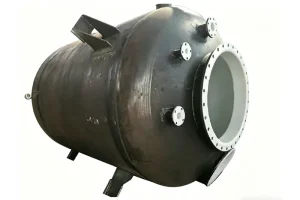
China PO/PE Lined Tank Products, Service
Explore Specifications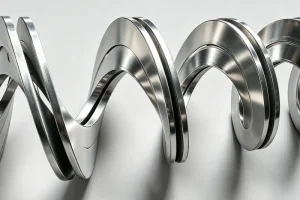
Custom Stainless Steel Screw Flight for Solid-Water Separation Equipment Factories, Factory
Explore Specifications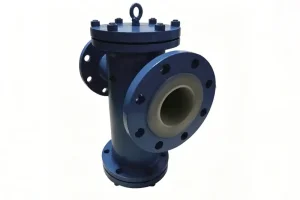
Custom PTFE-Lined Filter Factory, Service
Explore Specifications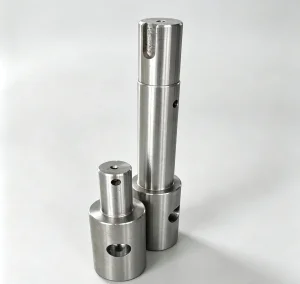
Custom Flexible Screw Conveyor Connecting Drive Shaft (Auger Shaft Head) Factory, Service
Explore Specifications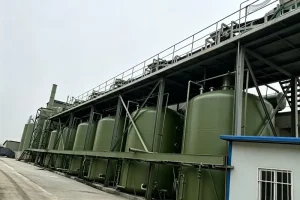
Custom Liquid Calcium Chloride Production Equipment Factory, Service
Explore Specifications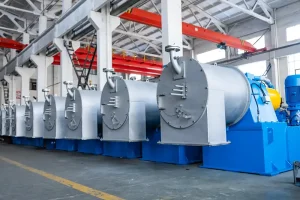
Custom Double Stage Piston Pusher Centrifuge Product, Products
Explore Specifications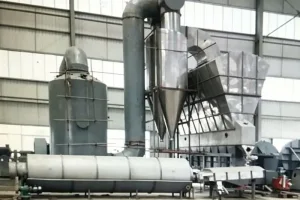
China Anhydrous Calcium Chloride Drying Equipment Factory, Product
Explore Specifications