
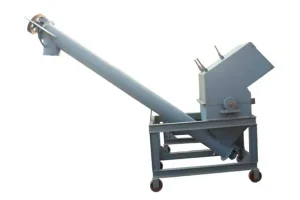
High-Impact Pre-Drying Particle Delumping System
Custom Hammer Crusher Products, ServicePre-engineered thermal desiccation modules, heavy-duty size reduction machinery, and corrosive chemical transmission units tailored to rigorous global EPC operational norms.
High-Impact Pre-Drying Particle Delumping System
Custom Hammer Crusher Products, Service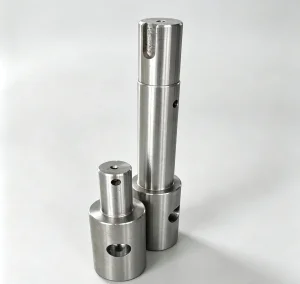
Aseptic & Sealed Vacuum Chamber Drive Mechanisms
Custom Flexible Screw Conveyor Connecting Drive Shaft (Auger Shaft Head) Factory, Service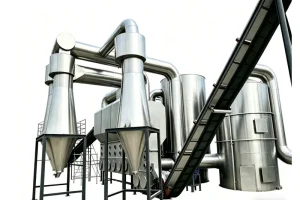
Hygroscopic Hydrate Thermal Stripping Vacuum Systems
China Dihydrate Calcium Chloride Drying Equipment Factory, Product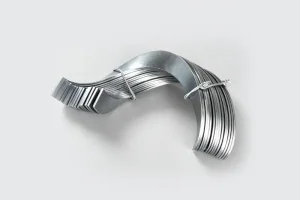
High-Heat-Transfer Continuous Vacuum Agitation Screws
Custom Equal-Thickness Segmental Screw Flight | Single-Piece Helical Blade Factory, Products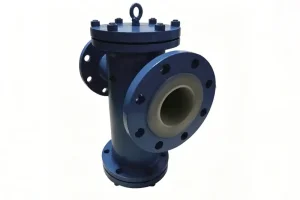
Corrosive Vapor Condensate & Vacuum Particulate Filtration
Custom PTFE-Lined Filter Factory, Service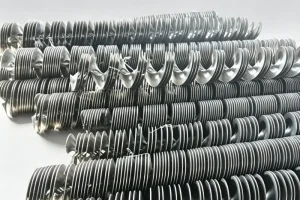
Continuous Non-Welded Cold-Rolled Desiccation Augers
Custom One-Time Formed Cold-Rolled Screw Flight | Harvester Auger Blade Products, Service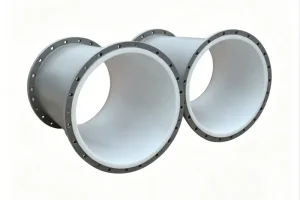
Vacuum Stripping Column & Solvents Recovery Towers
China PTFE Lined Tower Section Factories, Products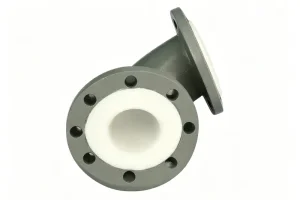
Full Vacuum Rated Anti-Permeation Piping Elbows
China PTFE Lined Elbow Product, ProductsAccelerating low-temperature phase transitions to preserve active molecular profiles, optimize sublimation dynamics, and curtail industrial carbon intensity.
By shifting operational pressure boundaries to ultra-deep vacuum thresholds (sub-0.1 mbar), our custom chambers reduce water and solvent boiling points exponentially. This allows thermal desorption of thermolabile compounds without inducing thermal degradation, crystalline warping, or localized burning.
Industrial sustainability benchmarks require complete containment. Integrated condenser interfaces and downstream scrubber couplings prevent high-volatility solvent releases, capturing 99.8% of organic condensates, reducing operational emissions, and guaranteeing pristine recovery of process-critical feedstocks.
Standard grade stainless alloys rapidly pit and deform in high-chloride, acidic desiccating matrices. Ruitu deploys high-integrity fluoropolymer barriers, including pure Virgin PTFE/PFA seamless lining, providing near-absolute immunity against halogen-rich off-gassing and severe acidic corrosion.
Deploying specialized drying chambers that address the unique phase boundaries, moisture migration resistances, and contamination sensitivities across critical global supply chains.
Lithium nickel manganese cobalt oxides (NMC) and lithium iron phosphate (LFP) mandate residual moisture levels of < 50 ppm to avoid hydrofluoric acid creation upon electrolyte filling. Our continuous and batch vacuum drying suites implement dynamic radiative and conductive shelf platens to guarantee rapid moisture evacuation without powder agglomeration.
Designed around strict cGMP and FDA requirements, our sanitary vacuum chambers incorporate crevice-free mirror-polished internal surfaces (Ra < 0.2 µm), CIP/SIP automated validation nozzles, and automated nitrogen pulsation mechanisms to eliminate solvent pockets while preserving volatile therapeutic active chains.
Drawing on Ruitu's foundational expertise in coastal bromine extraction and salt crystallization, our specialized vacuum systems dry calcium chloride dihydrate, magnesium chloride hexahydrate, and chemical salts without corrosive boundary degradation or heat-induced salt sintering.
A rigorous empirical breakdown of technical dimensions, thermal fluid distributions, and deep-vacuum metallurgical construction criteria.
| Performance / Engineering Metric | Laboratory & Pilot Series (VCD-Lab) | Modular Industrial Batch (VCD-Ind) | Continuous Turnkey EPC Suite (VCD-Max) |
|---|---|---|---|
| Volumetric Capacity Range | 50 L to 500 L | 1,000 L to 15,000 L | Custom continuous flow (> 25 m³) |
| Internal Chamber Metallurgy | AISI 316L / Hastelloy C-22 | AISI 316L / PTFE Seamless Lined | Fluoropolymer Coated / Heavy-Duty Alloy |
| Operating Vacuum Boundary | 0.01 mbar to Atmospheric | 0.05 mbar to Atmospheric | 0.1 mbar to Process Equilibrium |
| Thermal Fluid Jacket Distribution | Electric Mat / Heat Transfer Oil | High-Pressure Steam / Pressurized Hot Water | Multi-Zone Thermal Oil Cascading Loop |
| Door & Port Hermetic Sealing | Dual O-ring Viton / Encapsulated FEP | Pneumatic Inflatable Silicone / PTFE Ring | Automated Guillotine Vacuum Knife Gates |
| Control Automation & SCADA | Integrated PLC with Touch HMI | DCS Integration, 21 CFR Part 11 Architecture | Full Plant-Wide SCADA / IIoT Closed-Loop |
Integrating artificial intelligence, predictive desorption sensors, and thermodynamic energy recycling systems.
Transitioning beyond static cycle timers. Our systems integrate mass spectrometry, optical dew-point analyzers, and real-time off-gas infrared spectrographs. Algorithms analyze the desorption rate curve to determine exactly when equilibrium is reached, preventing over-drying and conserving up to 28% of electrical power.
By coupling Mechanical Vapor Recompression (MVR) loops to the high-vacuum effluent stream, latent heat from evaporated volatile vapors is compressed and recycled back into the primary heating platen loop, radically minimizing the operational utility footprint.
Introducing non-destructive acoustic frequencies directly onto high-vacuum drying shelves to lower internal capillary boundary resistance within crystalline matrix cakes, accelerating moisture release without thermal stress.
Comprehensive technical compliance for pressure retaining vessels, thermal boundary safety, and explosive environment certification.
Every vacuum vessel, jacket, and sealing door undergoes finite element stress analysis (FEA), hydrostatic pressure validation, and certified Non-Destructive Examination (NDE/RT/PT), fully compliant with ASME Boiler & Pressure Vessel Code Section VIII, Div 1, and the European Pressure Equipment Directive (PED 2014/68/EU).
For operations involving flammable solvent evaporation, Ruitu systems are constructed to ATEX/IECEx standards (Zone 0/20 internal, Zone 1/21 external). Utilizing anti-spark bronze guides, intrinsically safe instrumentation loops, and inert gas purging valves to maintain fail-safe operational integrity.
From initial laboratory raw material analysis and site selection in Weifang, through manufacturing, custom PTFE-lining, export packing, overseas installation, and operational commissioning, our multidisciplinary teams remain on-site until target yield and capacity metrics are achieved.
In-depth responses covering process optimization, materials selection, vacuum generation, and system customization.
Fluid management hardware, fluoropolymer flow barriers, and industrial material processing machines for severe operating environments.
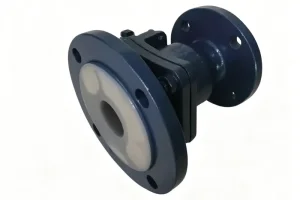
Zero-Dead-Zone Reactor & Vacuum Chamber Drain Gate
China PTFE-Lined Bottom Discharge Valve Products, Service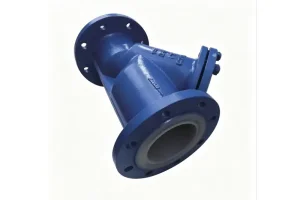
Corrosive Vapor Condensate & Liquid Impurity Separator
Custom PTFE-Lined Y-Strainer Factories, Factory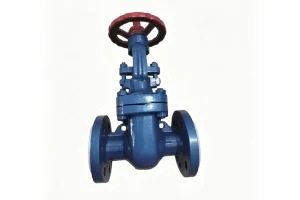
High-Integrity Corrosive Isolation Gate Barriers
Custom PTFE-Lined Gate Valve Factories, Factory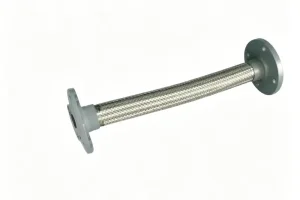
Vibration-Absorbing Deep Vacuum Anti-Corrosion Flex Joints
China PTFE-Lined Flexible Hose Factories, Service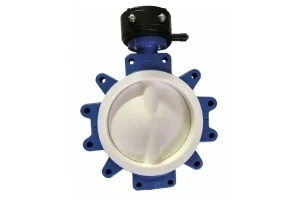
Bubble-Tight Vacuum Regulation Quarter-Turn Flow Isolator
Custom PTFE-Lined Butterfly Valve Factory, Service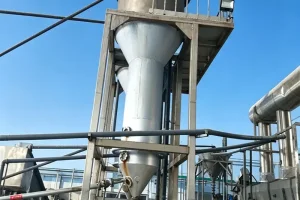
Integrated Crude Mineral Refining & Chemical Washing Suite
Custom Salt Washing Line Product, Products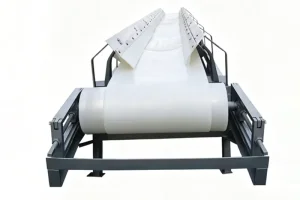
Saline-Resistant Anti-Abrasion Continuous Bulk Transfer
Custom Heavy-Duty Conveyor Belt For Salt Washing Production Line, Anti-Corrosion, Wear-Resistant, Food-Grade Material Factory, Product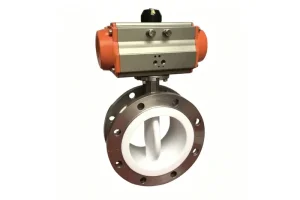
Pneumatic Actuated Emergency Shut-Off Vacuum Boundary Unit
Custom PTFE-Lined Pneumatic Butterfly Valve Factory, Products